This post contains affiliate links. As an Amazon Associate I earn from qualifying purchases.
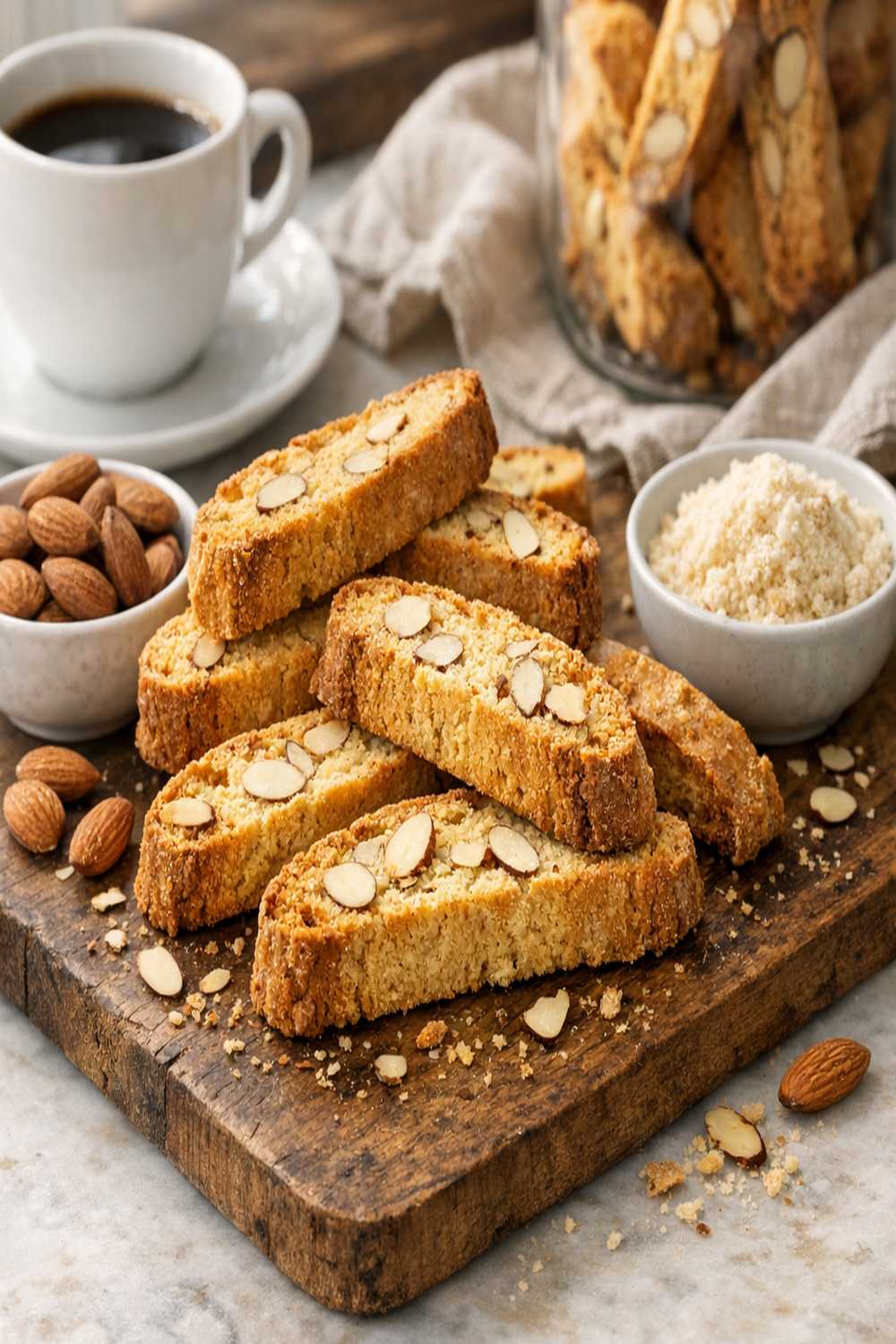
I’m going to be honest with you—these biscotti look and taste like they came straight from a high-end bakery counter, the kind where you’d spend $3 to $4 per cookie. But here’s the thing: I made a batch this morning for less than $12 total, which breaks down to about 75 cents per biscotti. That’s restaurant-quality twice-baked Italian cookies without the restaurant price tag. If you’re looking for other almond-based treats that won’t break the bank, check out my this simple cake—it’s another sneaky way to enjoy elegant desserts affordably.
Restaurant-Quality Almond Flour Biscotti Recipe for Under $12 (No Shortcuts on Flavor)
Growing up in Texas, I watched my grandmother transform simple pantry staples into meals that made people feel seen and celebrated. She never had much money, but she had something better—the knowledge that you could make something absolutely stunning without spending a fortune. That same philosophy carried into my work as a registered dietitian. I’ve spent years helping families understand that eating well and eating affordably aren’t opposites; they’re partners.
These almond flour biscotti remind me of those lessons. They’re the kind of recipe that teaches you something important about cooking: that texture, flavor, and elegance don’t require expensive ingredients or complicated techniques. They require intention, a little patience, and understanding how basic ingredients transform through heat and time.
The Real Cost Breakdown
Let me walk you through the actual numbers because I believe in transparency. When you shop smart, here’s what you’re paying:
- Blanched almond flour (3.5 cups) – roughly $3.50 to $4.00 when you buy the 3-pound bag at Costco or Amazon (the absolute cheapest route) versus $2.50 per cup at specialty stores
- Softened butter (½ cup) – about $0.75 from any grocery store’s house brand
- Raw honey (½ cup) – approximately $1.25 when purchased from a bulk section or discount warehouse
- Large eggs (2) – roughly $0.35 from conventional grocery store eggs
- Sliced pistachios (½ cup) – about $2.00 to $2.50 from the bulk bin at Whole Foods or Trader Joe’s
- Dried cranberries (¼ cup) – approximately $0.80 when you buy unsweetened from the bulk section
- Baking soda (1 teaspoon) – pennies from a box you already have
- Ground cinnamon (1 teaspoon) – negligible cost
- Sea salt (½ teaspoon) – negligible cost
- Almond extract (½ teaspoon) – roughly $0.15 from your pantry
Total cost: approximately $11.75 to $12.25
This recipe yields about 16 to 18 biscotti, bringing your per-cookie cost to roughly 70 to 75 cents. Compare that to a local bakery’s $3 to $4 per piece, and you’re looking at an 80% savings while controlling exactly what goes into your body. As a dietitian, I appreciate that part deeply—these are real ingredients, not mystery fillers.
Smart Shopping Tips for This Recipe
- Buy almond flour in bulk at Costco or Sam’s Club – a 3-pound bag runs $10 to $12 and gives you enough for multiple batches. Regular grocery stores charge double per ounce. Stock your freezer; it keeps beautifully for up to 6 months in an airtight container.
- Hit the bulk section for pistachios and cranberries – Whole Foods, Sprouts, and most natural grocers offer these without packaging markup. You’ll spend half the price of pre-packaged versions. Buy just what you need; there’s zero waste.
- Choose raw honey over processed varieties – yes, it costs slightly more upfront, but you’re getting actual nutrition and better flavor. Buy it in larger jars (24 ounces or more) from wholesale clubs or farmers markets. One jar lasts months.
- Splurge slightly on pure almond extract, not imitation – the flavor difference is dramatic, and you’re using just a half teaspoon. One bottle lasts through dozens of recipes. This is a place where quality genuinely matters for minimal extra cost.
- Shop seasonal for cranberries – dried cranberries drop in price around October through December. Buy extra and store in airtight containers. They’re excellent insurance for last-minute baking all year.
The Ingredients
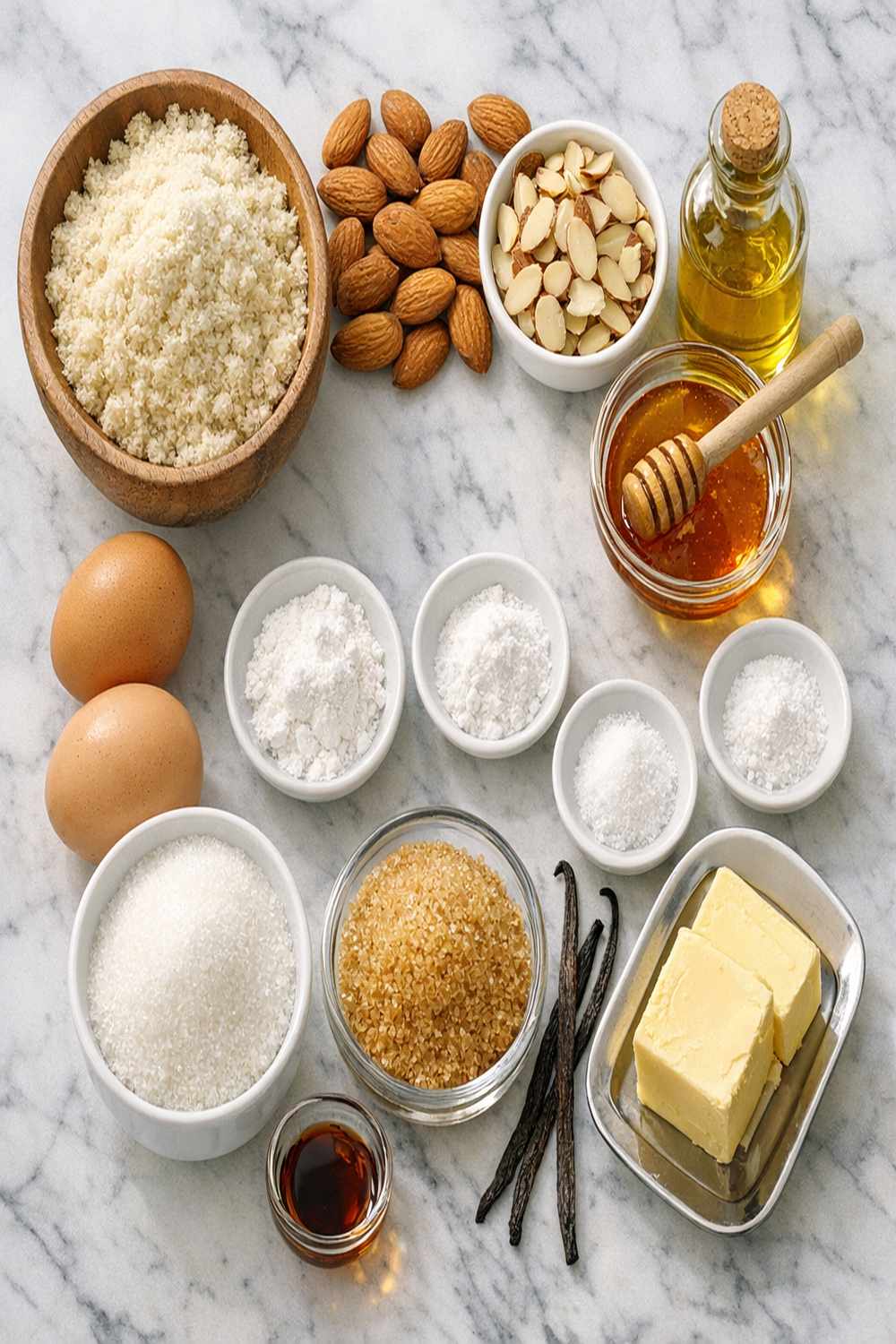
Every single ingredient in this recipe earns its place and its cost. There’s no filler here, no compromise. When you understand what each component does—how the almond flour creates structure and richness, how honey adds moisture and subtle sweetness, how the double-baking process creates that signature crunch—you’re not just following a recipe, you’re building something with intention.
- 1 teaspoon aluminum-free baking soda (creates lift during first bake)
- 1 teaspoon ground cinnamon (warmth and depth)
- ½ teaspoon pure almond extract (not imitation, amplifies almond flavor)
- ½ cup unsalted butter (softened to room temperature, creates tender crumb)
- ¼ cup dried unsweetened cranberries (optional but recommended, adds brightness and tartness)
- ½ cup shelled pistachios (sliced or roughly chopped, adds texture and nutrition)
- 3½ cups blanched almond flour (finely ground, provides structure and richness without refined carbs)
- ½ cup raw honey (provides moisture and balanced sweetness)
- ½ teaspoon fine sea salt (enhances all flavors)
- 2 large eggs (room temperature, binds ingredients and adds lift)
- 1 tablespoon vanilla extract (optional but adds subtle complexity)
Makes approximately 16 to 18 biscotti
How to Make Almond Flour Biscotti Recipe Without Breaking the Bank
I want to reframe something for you right now: making biscotti twice-baked isn’t a complication you’re enduring for cost savings. It’s actually the smarter approach that any professional would take. The double-baking process creates superior texture and extends shelf life beautifully, which means less waste and more value from your ingredients. This is smart cooking, not compromise cooking.
Step 1: Prepare Your Workspace and Preheat Your Oven
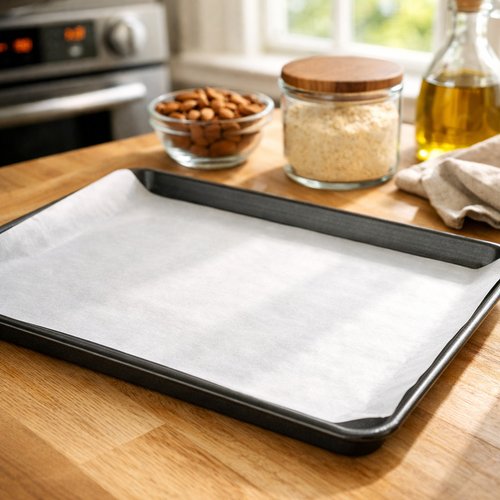
Start by preheating your oven to 325°F (about 160°C). While it heats, line a large baking sheet with parchment paper—this is essential for preventing sticking and makes cleanup essentially free. Set that aside and grab two large mixing bowls. Having everything ready before you start mixing is the difference between a smooth process and a chaotic one. This is called mise en place, and it’s the first thing professional bakers do.
Step 2: Mix Your Dry Ingredients
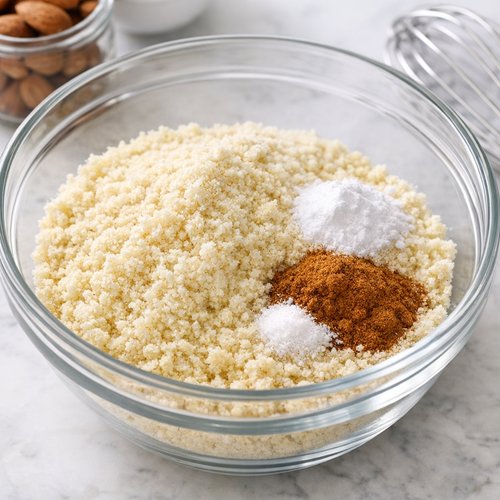
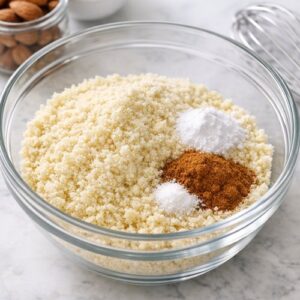
In your first large bowl, combine 3½ cups of blanched almond flour, 1 teaspoon of baking soda, 1 teaspoon of ground cinnamon, and ½ teaspoon of fine sea salt. Whisk these together thoroughly until completely combined, about 1 to 2 minutes. This ensures the leavening agent and seasonings distribute evenly throughout. Don’t skip the whisking step—clumpy baking soda leads to bitter pockets. I also like to add the sliced pistachios here and fold them through gently.
Step 3: Combine Your Wet Ingredients
In your second bowl, add ½ cup of softened butter and whisk it until it’s creamy and pale, about 1 to 2 minutes. This seems minor, but it matters—whipping air into the butter creates better texture. Add ½ cup of raw honey and mix until fully combined. Then add your 2 room-temperature eggs one at a time, whisking thoroughly after each addition. Finally, add ½ teaspoon of pure almond extract and stir until everything is smooth and homogeneous. Room temperature eggs mix more evenly and create better texture—take them out 15 minutes before you start.
Step 4: Gently Fold Wet Into Dry
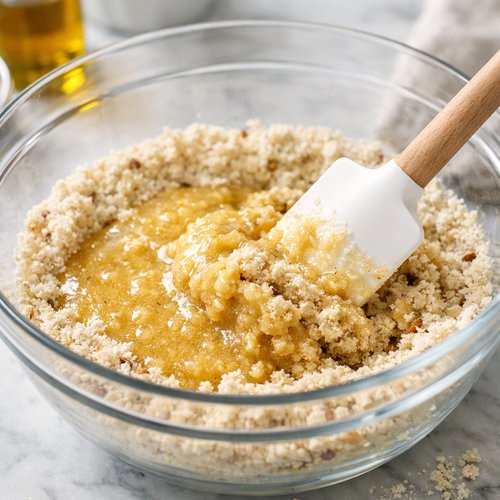
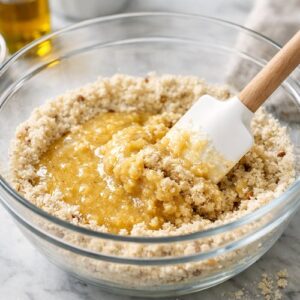
Here’s where patience pays off. Pour your wet ingredients into your dry ingredients and gently fold them together using a rubber spatula. Don’t be aggressive here. Fold slowly, scraping from the bottom and folding over the top, until you no longer see streaks of flour. This should take about 1 to 2 minutes. Once the dough just comes together, fold in your ¼ cup of dried cranberries. Overmixing develops gluten and creates tough, dense biscotti—you’re aiming for a thick, cookie-dough consistency.
Step 5: Shape Your Logs
Lightly flour a clean counter with a small amount of almond flour. Divide your dough into two equal portions—you can eyeball this or use a kitchen scale for precision. Shape each portion into a rectangular log about 12 inches long, 3 inches wide, and 1 inch tall. These logs don’t need to be perfect; slightly irregular shapes actually add charm. Place both logs on your parchment-lined baking sheet, spacing them about 2 inches apart so heat circulates evenly.
Step 6: First Bake—Creating the Foundation
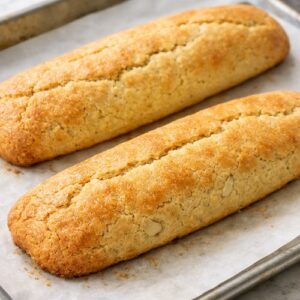
Bake these logs at 325°F for 30 to 35 minutes, until they’re golden brown on top and feel firm to the touch. You’re looking for a light golden color, not deep brown—almond flour browns faster than traditional flour, so watch carefully after 25 minutes. When you tap the top, it should feel set but still slightly springy. Set a timer and check at 30 minutes; every oven is different.
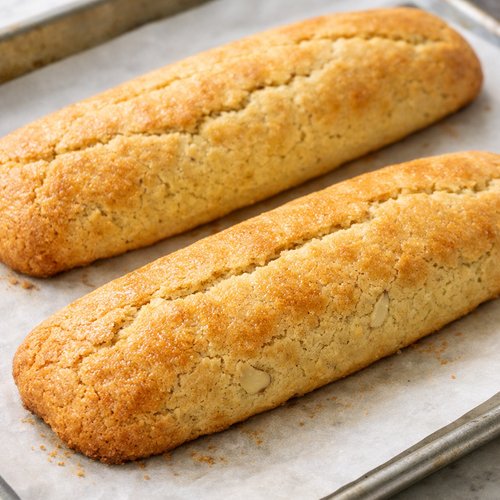
Step 7: Cool Before Slicing
Remove the baking sheet from the oven and let the logs cool on the pan for exactly 25 minutes. This cooling period is non-negotiable—if you slice them while they’re too hot, they’ll crumble and fall apart. The logs need to firm up enough to hold together under a knife. While they cool, reduce your oven temperature to 250°F (about 120°C).
Step 8: Slice Into Biscotti
Using a serrated bread knife or a very sharp chef’s knife, carefully slice each log on the diagonal into ½-inch-thick pieces. The diagonal cut is traditional and creates a larger surface area, which means more of that gorgeous crispy exterior. Aim for uniform thickness so they bake evenly. You should get about 8 to 9 slices per log, totaling 16 to 18 biscotti. A wet knife makes cleaner cuts—dip your blade in water between cuts.
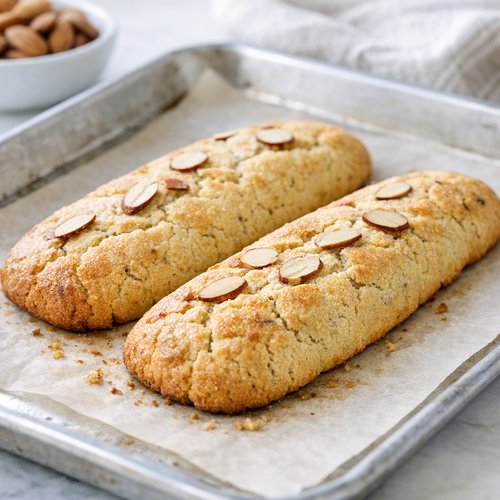
Step 9: Second Bake—Creating the Crunch
Stand your biscotti slices upright on the parchment-lined baking sheet, flat-side down. They can be close together but shouldn’t overlap. Bake at 250°F for 15 minutes, then flip each piece and bake for another 15 minutes on the other side. This dual-sided approach ensures crispness throughout. You’re looking for a deep golden color and a hard, dry texture. When you remove them, they should be firm enough to stand on their own.
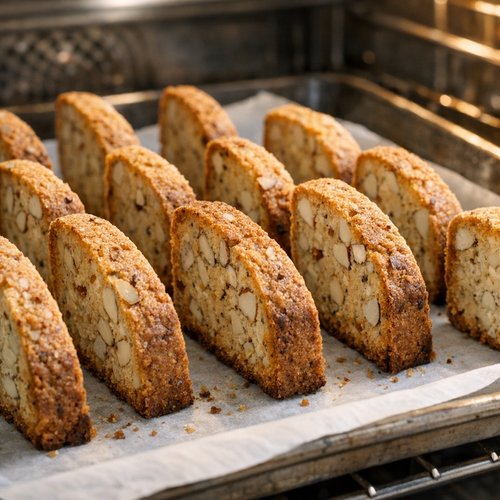
Step 10: Cool and Store Completely
Remove the biscotti from the oven and let them cool completely on the baking sheet for at least 30 minutes. During this cooling period, they’ll firm up even more and develop that signature snap. Don’t skip this step—warm biscotti feel different than cooled ones. Once fully cool, they’re ready to enjoy immediately or store for later.
Expert’s Nutritional Tip: Why Almond Flour Matters
As a registered dietitian, I want to highlight something crucial about almond flour that makes these biscotti nutritionally superior to traditional wheat-based versions. Almond flour is naturally rich in vitamin E, magnesium, and monounsaturated fats—the kind of fat that supports heart health and satiety. Unlike refined wheat flour, almond flour has a low glycemic index, meaning it doesn’t spike your blood sugar dramatically. One serving of these biscotti (about one cookie) provides approximately 3 grams of protein and 2 grams of fiber, plus real nutrients your body recognizes. That’s the difference between a treat and a nutritionally thoughtful indulgence.
How to Stretch This Recipe Further
- Make flavored variations to double your enjoyment – substitute dried unsweetened cherries or blueberries for cranberries, or add a teaspoon of orange zest to the wet ingredients. Each variation uses ingredients you likely already have, stretching your creative output without increasing cost.
- Transform stale biscotti into biscotti crumble – if your biscotti ever loses its snap (unlikely given proper storage), crush them into coarse crumbs and use as a topping for yogurt, in smoothie bowls, or mixed into homemade almond butter for texture. Zero waste, maximum value.
- Batch bake and freeze for month-long enjoyment – this recipe doubles beautifully, and fully cooled biscotti freeze perfectly for up to 3 months in an airtight container. Make two batches when you have time, and you’ve got elegant treats ready for unexpected guests, lunchbox additions, or your own afternoon coffee ritual.
- Package as gifts to multiply their value – homemade biscotti cost you 75 cents per piece but feel like a $30 gift when wrapped in parchment paper and tied with twine. Share them, and you’ve created something memorable while spending minimal money. That’s the definition of smart cooking.
Make-Ahead Guide: Meal Prep for Maximum Convenience
I always think of biscotti as the ultimate make-ahead dessert because they’re designed to be stable and shelf-stable. Here’s how I structure my biscotti prep for maximum efficiency:
Three Days Before Serving: Mix your dry ingredients in an airtight container and keep at room temperature. This is non-negotiable only for the almond flour—oils can oxidize—but I do it anyway because it saves time on baking day.
One Day Before Baking: Measure and combine all wet ingredients in a bowl, cover with plastic wrap, and refrigerate. This actually improves flavor slightly as the honey and extract infuse overnight. Let it sit at room temperature for 15 minutes before mixing with dry ingredients.
Baking Day: Complete the process from mixing through the second bake. Total time is about 1 hour and 45 minutes of actual work spread across about 3 hours of oven time.
Storage Strategy: Once completely cooled, store biscotti in an airtight container (glass is best) at room temperature for up to 14 days. For longer storage, arrange in a single layer on a baking sheet, freeze for 2 hours, then transfer to a freezer-safe container for up to 3 months. Thaw at room temperature for 20 minutes before serving.
Common Mistakes to Avoid
- Using room-temperature almond flour instead of chilled – almond flour has high oil content. If it’s warm, it creates a greasy dough. Store your flour in the freezer and use it cold. This single tip prevents more failed batches than anything else I’ve learned.
- Skipping the full cooling period between bakes – I know 25 minutes feels long, but the logs must firm up completely or they’ll crumble when you slice them. Use this time to clean your bowls and prepare your workspace. It’s not wasted time; it’s strategic planning.
- Overmixing the dough – this creates tough, dense biscotti instead of tender ones. Fold gently until you no longer see flour streaks, then stop. Trust me on this; I’ve made the mistake of “just one more fold.”
- Slicing too thickly or too thinly – thicker than ½ inch and the center stays soft; thinner than ¼ inch and they become brittle. The ½-inch mark is Goldilocks territory. Invest in a serrated bread knife; it makes all the difference in clean, even slices.
Budget Substitutions That Don’t Sacrifice Quality
- Raw honey -> Grade-A maple syrup: You’ll use the same amount (½ cup), and maple syrup adds subtle earthiness. Flavor shifts slightly but stays sophisticated. Cost is comparable, and the nutritional profile is similar.
- Sliced pistachios -> Sliced almonds: Same amount, familiar flavor that blends seamlessly with almond flour. Almonds are often cheaper at bulk bins. Texture is identical, and cost savings are 30 to 40%.
- Dried cranberries -> Dried blueberries or raisins: ¼ cup of either works perfectly. Raisins are often the cheapest option and add natural sweetness. This saves about 50 cents per batch.
- Pure almond extract -> Pure vanilla extract: Use the same amount (½ teaspoon). The cookies become more vanilla-forward and less intensely almond-flavored, but they’re still elegant and delicious. This is your biggest budget flexibility, saving about $0.10 per batch.
Seasonal Variations to Keep Things Fresh
- Spring Version: Replace cranberries with freeze-dried strawberries and add ½ teaspoon of fresh lemon zest to the wet ingredients. Feels bright and celebratory. Strawberries are cheapest at farmers markets in May and June.
- Summer Version: Use dried blueberries instead of cranberries and add ¼ teaspoon of vanilla extract to the existing almond extract. Creates a more subtle, refined flavor profile perfect for iced coffee.
- Fall Version: Keep the cranberries and pistachios, but increase cinnamon to 1½ teaspoons and add ¼ teaspoon of ground ginger and a pinch of nutmeg. Feels like autumn in cookie form. Cost is identical because you likely have these spices already.
- Winter Version: Add ¼ teaspoon of peppermint extract (not peppermint flavoring) instead of almond extract, and fold in ¼ cup of dark chocolate chips. Feels festive and decadent. Chocolate chips cost about $1 at discount stores.
Can I Store Almond Flour Biscotti Recipe?
This is where biscotti truly shine as a budget-friendly choice—they’re literally designed to last. The double-baking process removes moisture, which means they don’t go stale quickly like regular cookies.
Room temperature storage (Recommended): Keep cooled biscotti in an airtight glass container at room temperature. They stay crisp and delicious for up to 14 days. If humidity is high where you live, place a paper towel in the container to absorb excess moisture. Replace it daily if needed.
Freezer storage (For longer periods): Arrange completely cooled biscotti in a single layer on a baking sheet and freeze for 2 hours. Once solid, transfer to a freezer-safe container or resealable bags, removing as much air as possible. They’ll keep beautifully for up to 3 months. Thaw at room temperature for 20 minutes before serving—no oven re-bake needed.
Refrigerator storage (Not recommended): While technically safe, refrigeration introduces moisture through condensation, which softens the biscotti. Skip the fridge and go straight to room temperature or freezer.
Sustainability note: Because these last so long, you’re reducing food waste dramatically. That’s both an environmental win and a financial one. The money you save on thrown-away stale biscotti can go toward ingredients for your next batch.
Nutrition Information
Based on USDA nutrition data for the primary ingredients, here’s what you’re getting per biscotti (based on 16 total):
Per serving (1 biscotti): Approximately 165 calories, 13 grams of fat (mostly from almonds and butter), 8 grams of carbohydrates, 2 grams of dietary fiber, 4.5 grams of protein, and 35mg of calcium. These cookies are notably higher in protein and fiber than traditional flour-based biscotti, thanks to the almond flour base. The monounsaturated fats from almonds and pistachios support cardiovascular health, and the low glycemic load means sustained energy without blood sugar spikes.
From a value perspective, you’re spending approximately 75 cents per serving to get whole-food nutrition—no refined sugar, no artificial ingredients, no mystery fillers. Most store-bought biscotti cost $3 to $4 and contain corn syrup, soy lecithin, and other additives. That’s the real story here: you’re not just saving money; you’re investing in your health.
What Can I Serve With Almond Flour Biscotti Recipe?
Biscotti are traditionally dunked, so pairing them with the right beverage or accompaniment is part of the experience. Here are my favorite budget-friendly options:
- Brewed coffee or espresso – the classic pairing, costs pennies per cup if you brew at home, and the bitterness of coffee balances the sweetness of the biscotti perfectly
- Herbal tea – chamomile or peppermint tea (about 15 cents per cup when using bulk loose leaf) pairs beautifully, especially the winter variation
- Hot milk or steamed almond milk – creates a latte-style experience without the café price tag. Almond milk pairs naturally since these are almond-flour based
- Yogurt for dunking – Greek yogurt (about $0.75 per serving) turns biscotti into a breakfast situation. The crunch against creamy yogurt is divine
- Sweet Cream Cheese Dipping Sauce – if you want to elevate these for company, make my Sweet Cream Cheese Dipping Sauce, which costs about $2 total and feels absolutely luxurious. Whipped cream cheese, a touch of honey, and vanilla create magic

Almond Flour Biscotti Recipe
Ingredients
Method
- Start by preheating your oven to 325°F (about 160°C). While it heats, line a large baking sheet with parchment paper—this is essential for preventing sticking and makes cleanup essentially free. Set that aside and grab two large mixing bowls. Having everything ready before you start mixing is the difference between a smooth process and a chaotic one. This is called mise en place, and it's the first thing professional bakers do.
- In your first large bowl, combine 3½ cups of blanched almond flour, 1 teaspoon of baking soda, 1 teaspoon of ground cinnamon, and ½ teaspoon of fine sea salt. Whisk these together thoroughly until completely combined, about 1 to 2 minutes. This ensures the leavening agent and seasonings distribute evenly throughout. Don't skip the whisking step—clumpy baking soda leads to bitter pockets. I also like to add the sliced pistachios here and fold them through gently.
- In your second bowl, add ½ cup of softened butter and whisk it until it's creamy and pale, about 1 to 2 minutes. This seems minor, but it matters—whipping air into the butter creates better texture. Add ½ cup of raw honey and mix until fully combined. Then add your 2 room-temperature eggs one at a time, whisking thoroughly after each addition. Finally, add ½ teaspoon of pure almond extract and stir until everything is smooth and homogeneous. Room temperature eggs mix more evenly and create better texture—take them out 15 minutes before you start.
- Here's where patience pays off. Pour your wet ingredients into your dry ingredients and gently fold them together using a rubber spatula. Don't be aggressive here. Fold slowly, scraping from the bottom and folding over the top, until you no longer see streaks of flour. This should take about 1 to 2 minutes. Once the dough just comes together, fold in your ¼ cup of dried cranberries. Overmixing develops gluten and creates tough, dense biscotti—you're aiming for a thick, cookie-dough consistency.
- Lightly flour a clean counter with a small amount of almond flour. Divide your dough into two equal portions—you can eyeball this or use a kitchen scale for precision. Shape each portion into a rectangular log about 12 inches long, 3 inches wide, and 1 inch tall. These logs don't need to be perfect; slightly irregular shapes actually add charm. Place both logs on your parchment-lined baking sheet, spacing them about 2 inches apart so heat circulates evenly.
- Bake these logs at 325°F for 30 to 35 minutes, until they're golden brown on top and feel firm to the touch. You're looking for a light golden color, not deep brown—almond flour browns faster than traditional flour, so watch carefully after 25 minutes. When you tap the top, it should feel set but still slightly springy. Set a timer and check at 30 minutes; every oven is different.
- Remove the baking sheet from the oven and let the logs cool on the pan for exactly 25 minutes. This cooling period is non-negotiable—if you slice them while they're too hot, they'll crumble and fall apart. The logs need to firm up enough to hold together under a knife. While they cool, reduce your oven temperature to 250°F (about 120°C).
- Using a serrated bread knife or a very sharp chef's knife, carefully slice each log on the diagonal into ½-inch-thick pieces. The diagonal cut is traditional and creates a larger surface area, which means more of that gorgeous crispy exterior. Aim for uniform thickness so they bake evenly. You should get about 8 to 9 slices per log, totaling 16 to 18 biscotti. A wet knife makes cleaner cuts—dip your blade in water between cuts.
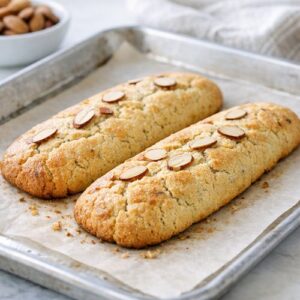
- Stand your biscotti slices upright on the parchment-lined baking sheet, flat-side down. They can be close together but shouldn't overlap. Bake at 250°F for 15 minutes, then flip each piece and bake for another 15 minutes on the other side. This dual-sided approach ensures crispness throughout. You're looking for a deep golden color and a hard, dry texture. When you remove them, they should be firm enough to stand on their own.
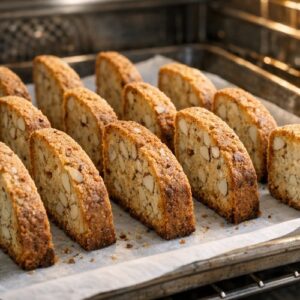
- Remove the biscotti from the oven and let them cool completely on the baking sheet for at least 30 minutes. During this cooling period, they'll firm up even more and develop that signature snap. Don't skip this step—warm biscotti feel different than cooled ones. Once fully cool, they're ready to enjoy immediately or store for later.
Notes
FAQs
Can I use regular all-purpose flour instead of almond flour to save money?
Technically yes, but I wouldn’t recommend it, and here’s why: regular flour creates a completely different texture—more cake-like, less crunchy. These biscotti rely on almond flour’s structure to achieve that signature snap. Plus, almond flour at Costco ($3.50 to $4) is actually cheaper per ounce than quality all-purpose flour when you compare bulk pricing. If budget is genuinely tight, I’d suggest making fewer biscotti with almond flour rather than substituting the flour itself.
What if I don’t have almond extract?
Pure vanilla extract works beautifully as a 1:1 replacement. The cookies become more vanilla-forward, which is still delicious. Skip imitation extracts entirely—the flavor is genuinely inferior and saves you maybe a dime. The difference between real and imitation vanilla is massive, and it shows in every bite.
Can I make these without the cranberries?
Absolutely. Skip them entirely, or add the same amount of chopped dried apricots, blueberries, or raisins. The cranberries add tartness and complexity, but they’re optional. Some people love pure almond and pistachio biscotti without any additional fruit, which is equally valid and slightly cheaper.
Do I really need to do the double-baking process?
Yes, and I say this as someone who understands the temptation to skip steps. The double-bake creates that signature texture that makes biscotti worth eating. If you skip the second bake, you’ll have dense almond flour cookies—not bad, but not true biscotti. The second bake is what gives you the crunch that makes them special enough to dunk in coffee. It’s 30 minutes well spent.
Why did my biscotti turn out dense and heavy?
Most likely culprit: overmixing the dough. When you overwork almond flour dough, you break down the structure and release oils, creating a greasy, dense result. Mix just until combined, fold in the cranberries, and stop. The second possibility: your eggs weren’t room temperature. Cold eggs don’t incorporate as smoothly and create a heavier crumb. Leave eggs on the counter for 15 minutes before using.
More Budget-Friendly Recipes
- Almond Flour Tortillas Recipe – another brilliant way to use bulk almond flour for everyday meals that cost about 30 cents each
- Almond Flour Banana Nut Bread Recipe – transforms overripe bananas into a moist, elegant bread that costs under $8 for the whole loaf
- Almond Joy Recipe – recreate the beloved candy bar at home for about 40 cents per piece versus $1.50 in stores
Listen, I want to circle back to something important. These biscotti represent more than a recipe—they’re proof that you can create something genuinely beautiful without excessive spending. That’s been my philosophy as both a dietitian and a cook: that real food, made with intention, doesn’t require a trust fund. My grandmother understood this deeply, and she passed it to me through meals made in her kitchen.
When you make these biscotti, you’re not just following instructions. You’re learning how simple ingredients transform through heat and technique. You’re understanding that texture matters, that timing matters, that attention matters. And you’re feeding yourself or your loved ones something made by your own hands, with ingredients you can pronounce, for a fraction of what a bakery would charge.
That’s the real win here—not just the money saved, though that matters too. It’s the confidence that comes from knowing you can create excellence affordably. That’s something they can’t sell you at any price.
Enjoy your cooking journey!