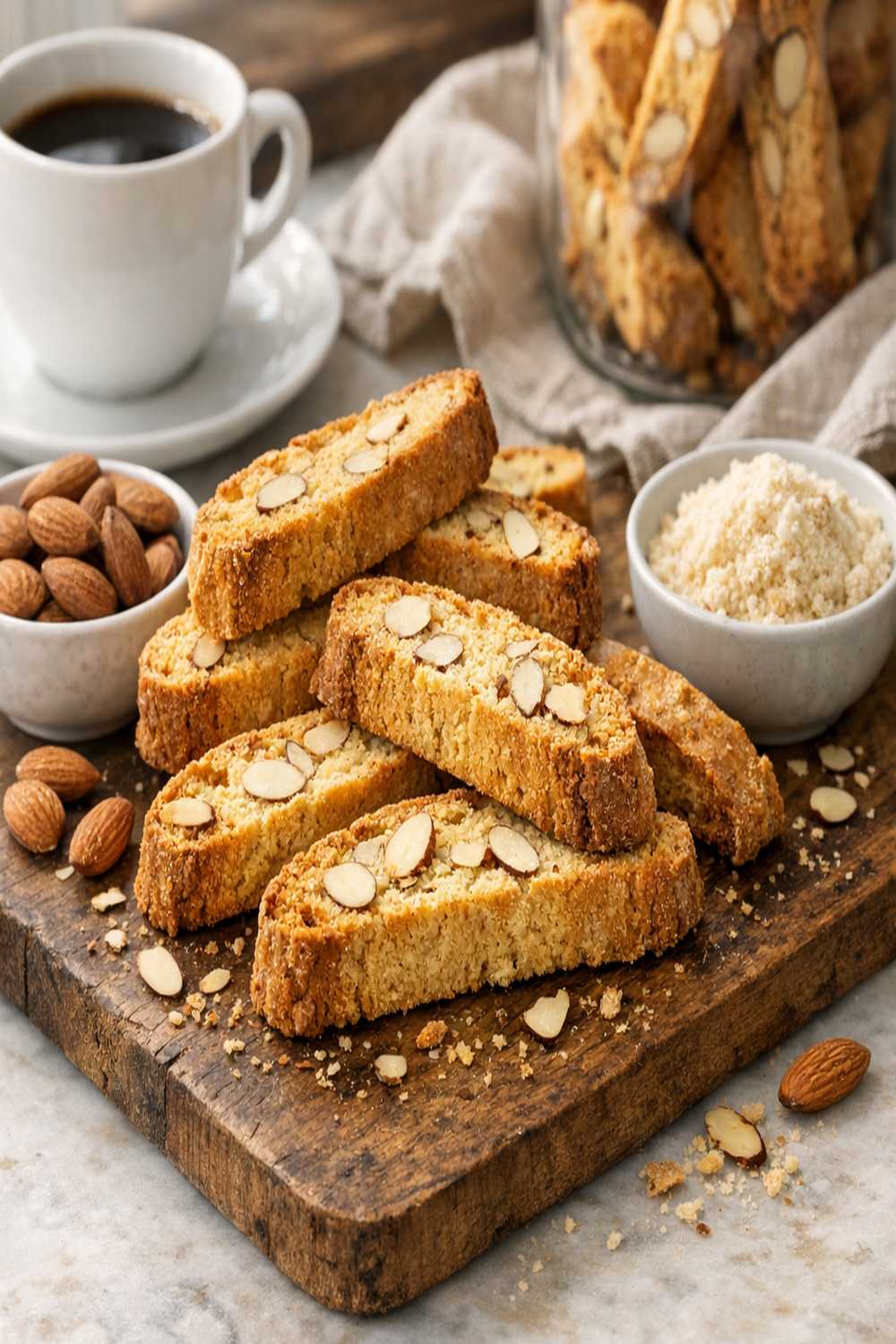

Ingredients
Method
Step 1: Prepare Your Workspace and Preheat Your Oven
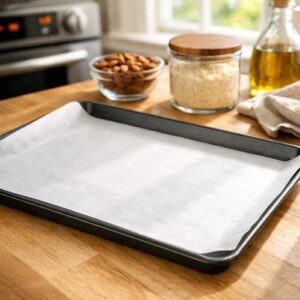
- Start by preheating your oven to 325°F (about 160°C). While it heats, line a large baking sheet with parchment paper—this is essential for preventing sticking and makes cleanup essentially free. Set that aside and grab two large mixing bowls. Having everything ready before you start mixing is the difference between a smooth process and a chaotic one. This is called mise en place, and it's the first thing professional bakers do.
Step 2: Mix Your Dry Ingredients
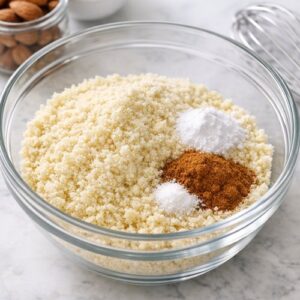
- In your first large bowl, combine 3½ cups of blanched almond flour, 1 teaspoon of baking soda, 1 teaspoon of ground cinnamon, and ½ teaspoon of fine sea salt. Whisk these together thoroughly until completely combined, about 1 to 2 minutes. This ensures the leavening agent and seasonings distribute evenly throughout. Don't skip the whisking step—clumpy baking soda leads to bitter pockets. I also like to add the sliced pistachios here and fold them through gently.
Step 3: Combine Your Wet Ingredients
- In your second bowl, add ½ cup of softened butter and whisk it until it's creamy and pale, about 1 to 2 minutes. This seems minor, but it matters—whipping air into the butter creates better texture. Add ½ cup of raw honey and mix until fully combined. Then add your 2 room-temperature eggs one at a time, whisking thoroughly after each addition. Finally, add ½ teaspoon of pure almond extract and stir until everything is smooth and homogeneous. Room temperature eggs mix more evenly and create better texture—take them out 15 minutes before you start.
Step 4: Gently Fold Wet Into Dry
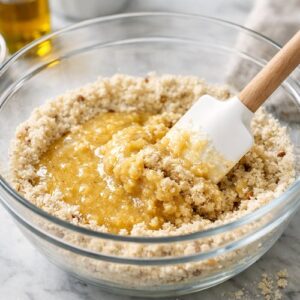
- Here's where patience pays off. Pour your wet ingredients into your dry ingredients and gently fold them together using a rubber spatula. Don't be aggressive here. Fold slowly, scraping from the bottom and folding over the top, until you no longer see streaks of flour. This should take about 1 to 2 minutes. Once the dough just comes together, fold in your ¼ cup of dried cranberries. Overmixing develops gluten and creates tough, dense biscotti—you're aiming for a thick, cookie-dough consistency.
Step 5: Shape Your Logs
- Lightly flour a clean counter with a small amount of almond flour. Divide your dough into two equal portions—you can eyeball this or use a kitchen scale for precision. Shape each portion into a rectangular log about 12 inches long, 3 inches wide, and 1 inch tall. These logs don't need to be perfect; slightly irregular shapes actually add charm. Place both logs on your parchment-lined baking sheet, spacing them about 2 inches apart so heat circulates evenly.
Step 6: First Bake—Creating the Foundation
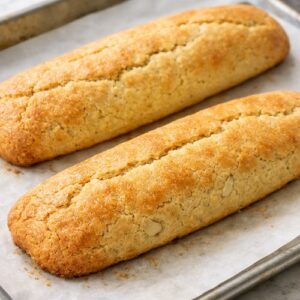
- Bake these logs at 325°F for 30 to 35 minutes, until they're golden brown on top and feel firm to the touch. You're looking for a light golden color, not deep brown—almond flour browns faster than traditional flour, so watch carefully after 25 minutes. When you tap the top, it should feel set but still slightly springy. Set a timer and check at 30 minutes; every oven is different.
Step 7: Cool Before Slicing
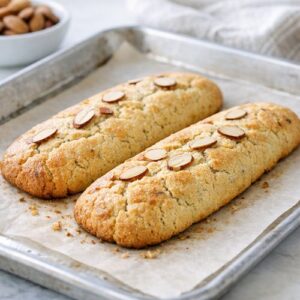
- Remove the baking sheet from the oven and let the logs cool on the pan for exactly 25 minutes. This cooling period is non-negotiable—if you slice them while they're too hot, they'll crumble and fall apart. The logs need to firm up enough to hold together under a knife. While they cool, reduce your oven temperature to 250°F (about 120°C).
Step 8: Slice Into Biscotti
- Using a serrated bread knife or a very sharp chef's knife, carefully slice each log on the diagonal into ½-inch-thick pieces. The diagonal cut is traditional and creates a larger surface area, which means more of that gorgeous crispy exterior. Aim for uniform thickness so they bake evenly. You should get about 8 to 9 slices per log, totaling 16 to 18 biscotti. A wet knife makes cleaner cuts—dip your blade in water between cuts.
Step 9: Second Bake—Creating the Crunch
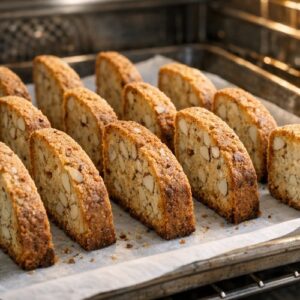
- Stand your biscotti slices upright on the parchment-lined baking sheet, flat-side down. They can be close together but shouldn't overlap. Bake at 250°F for 15 minutes, then flip each piece and bake for another 15 minutes on the other side. This dual-sided approach ensures crispness throughout. You're looking for a deep golden color and a hard, dry texture. When you remove them, they should be firm enough to stand on their own.
Step 10: Cool and Store Completely
- Remove the biscotti from the oven and let them cool completely on the baking sheet for at least 30 minutes. During this cooling period, they'll firm up even more and develop that signature snap. Don't skip this step—warm biscotti feel different than cooled ones. Once fully cool, they're ready to enjoy immediately or store for later.
Notes
- Buy almond flour in bulk at Costco or Sam's Club - a 3-pound bag runs $10 to $12 and gives you enough for multiple batches. Regular grocery stores charge double per ounce. Stock your freezer; it keeps beautifully for up to 6 months in an airtight container.
- Hit the bulk section for pistachios and cranberries - Whole Foods, Sprouts, and most natural grocers offer these without packaging markup. You'll spend half the price of pre-packaged versions. Buy just what you need; there's zero waste.
- Choose raw honey over processed varieties - yes, it costs slightly more upfront, but you're getting actual nutrition and better flavor. Buy it in larger jars (24 ounces or more) from wholesale clubs or farmers markets. One jar lasts months.
- Splurge slightly on pure almond extract, not imitation - the flavor difference is dramatic, and you're using just a half teaspoon. One bottle lasts through dozens of recipes. This is a place where quality genuinely matters for minimal extra cost.
- Shop seasonal for cranberries - dried cranberries drop in price around October through December. Buy extra and store in airtight containers. They're excellent insurance for last-minute baking all year.