This post contains affiliate links. As an Amazon Associate I earn from qualifying purchases.
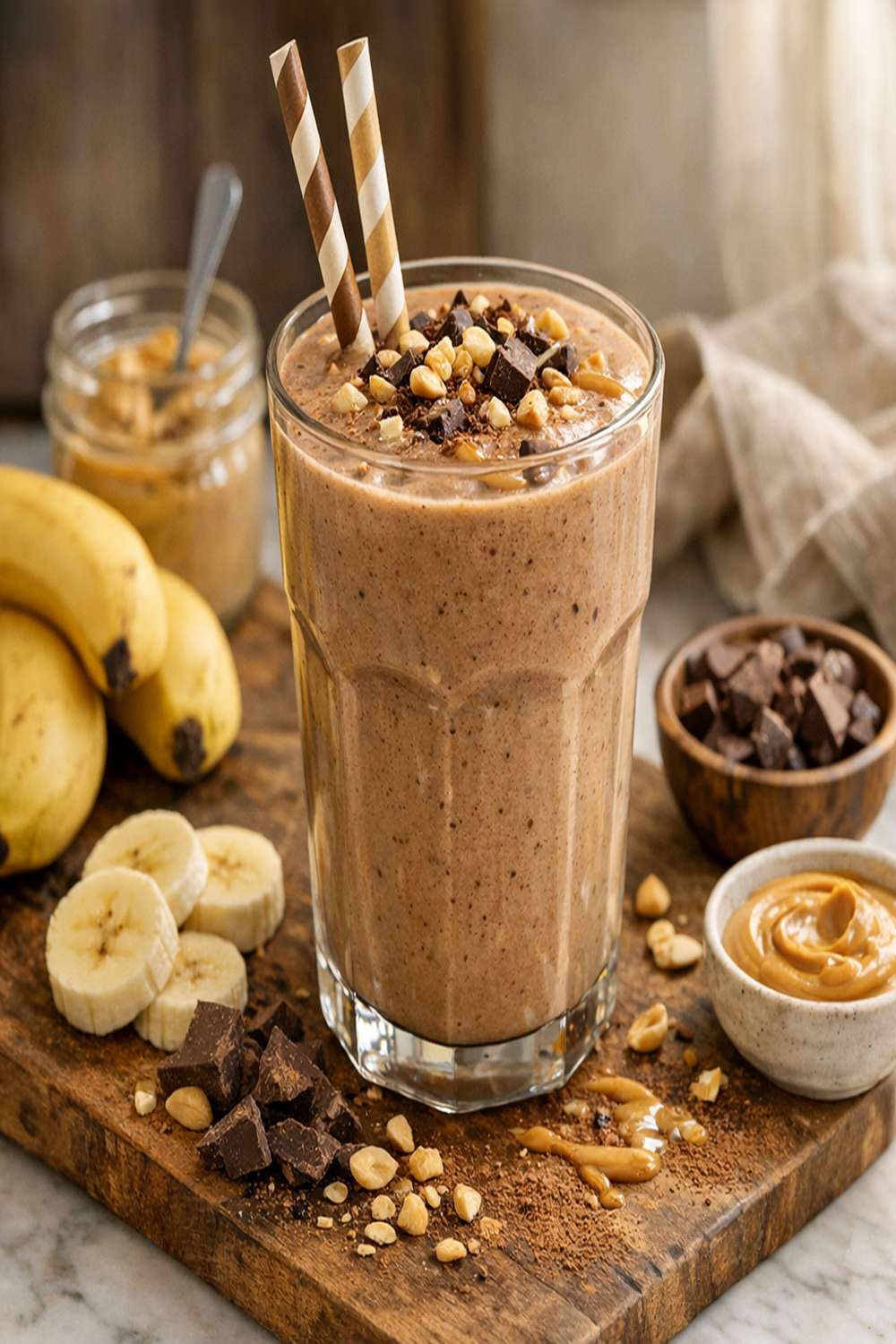
This Banana Chocolate Peanut Butter Smoothie Recipe brings together the wholesome comfort of classic American breakfast traditions with the nutrient-dense approach of modern sports nutrition in a way that honors both while creating something entirely new. I grew up watching my grandmother blend fresh fruit into simple, nourishing drinks for our family gatherings, never knowing she was creating balanced meals long before “smoothie bowls” became trendy. What started as her way to sneak extra nutrition into my picky-eating cousins has evolved into my favorite way to start mornings—creamy, rich, and legitimately good for you. This smoothie tastes like indulgence but delivers the kind of sustained energy and protein that keeps you satisfied until lunch.
Where Comfort Food Meets Clinical Nutrition: The Story Behind This Smoothie
I remember the exact moment this smoothie changed how I think about breakfast. I was in my first year as a registered dietitian, working with athletes who needed quick, portable nutrition before early morning workouts. Meanwhile, my mom was still making her signature chocolate-peanut butter treats for family reunions—the kind of rich, satisfying flavors that made everyone smile. I found myself standing in my kitchen at 5 a.m., thinking: What if I could capture that nostalgic, indulgent feeling while delivering the protein, healthy fats, and complex carbohydrates my clients actually needed?
The result was this smoothie. It’s my love letter to both worlds—the soulful, uncomplicated cooking that defined my childhood, and the evidence-based nutrition that guides my practice. Every sip tastes like dessert, but your body recognizes it as a legitimate meal. That’s where the magic happens.
The Two Traditions Behind This Drink
This smoothie is rooted in two beautiful culinary philosophies that, at first glance, seem worlds apart. But once you understand what each brings to the table, you’ll see why they were meant to come together.
- American Comfort Food Heritage – This tradition celebrates indulgence, nostalgia, and the joy of flavors that make you feel cared for. Chocolate, peanut butter, and bananas are iconic American favorites that appear everywhere from diners to children’s lunch boxes. They represent warmth, generosity, and the idea that good food should taste like love.
- Sports Nutrition Science – This modern approach prioritizes bioavailable protein, healthy fats, and sustained energy release. It’s about intentionality, measuring impact, and understanding exactly how food fuels your body. Greek yogurt, precise portions, and strategic ingredient combinations come from this tradition.
Why This Fusion Actually Works
Here’s the nutrition science side that makes me genuinely excited: peanut butter contains both fat and protein, which slows glucose absorption and prevents blood sugar spikes. When you combine it with banana’s natural carbohydrates and Greek yogurt’s whey protein, you’re creating a macronutrient profile that’s almost textbook perfect for sustained energy. The cocoa powder adds polyphenols—powerful antioxidants that your body will thank you for.
But here’s the part that matters emotionally: it tastes like chocolate-peanut butter heaven. There’s no nutrition lecture in this smoothie, no “health food” compromise. You get to feel like you’re treating yourself while actually nourishing your body in the most sophisticated way. That’s the fusion magic. That’s why I make this three times a week.
The Ingredients – A Tale of Two Traditions
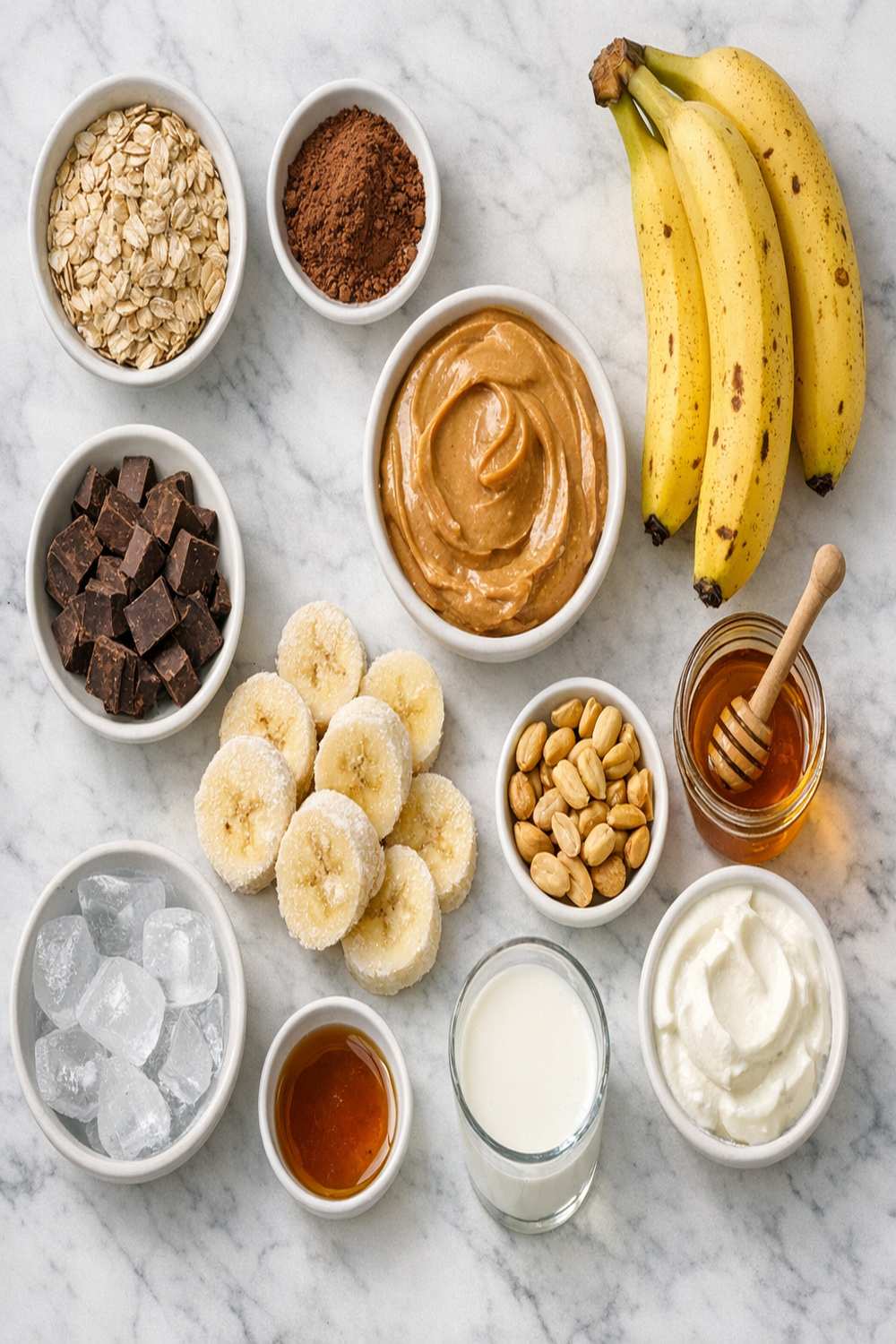
Each ingredient in this smoothie plays a specific role, and they all come together to create something greater than their parts. I’ve arranged them by what they contribute to your glass.
The Protein & Creaminess Builders
- ¼ cup creamy natural peanut butter (provides healthy monounsaturated fats and plant-based protein for satiety)
- ½ cup low-fat vanilla Greek yogurt (adds creamy texture and 10+ grams of whey protein per serving)
- ½ cup whole milk (full-fat creates better mouthfeel and aids absorption of fat-soluble vitamins)
The Flavor & Nutrition Powerhouses
- 2 medium bananas, frozen (natural sweetness, potassium, and resistant starch for digestive health)
- 1 teaspoon raw honey (optional, but adds just enough natural sweetness if your bananas aren’t fully ripe)
- ¼ teaspoon sea salt (enhances all the flavors and balances the sweetness perfectly)
- ¾ cup ice (creates that thick, milkshake-like texture that makes this feel indulgent)
- 2 tablespoons unsweetened cocoa powder (delivers antioxidants and rich chocolate flavor without added sugar)
Makes: 2 generous servings
How to Make This Fusion Banana Chocolate Peanut Butter Smoothie Recipe
This process is straightforward, but there are a few pro tips I’ve learned from making hundreds of these smoothies. Let me walk you through it the way I do it every morning in my kitchen.
Step 1: Prep Your Bananas (The Make-Ahead Advantage)
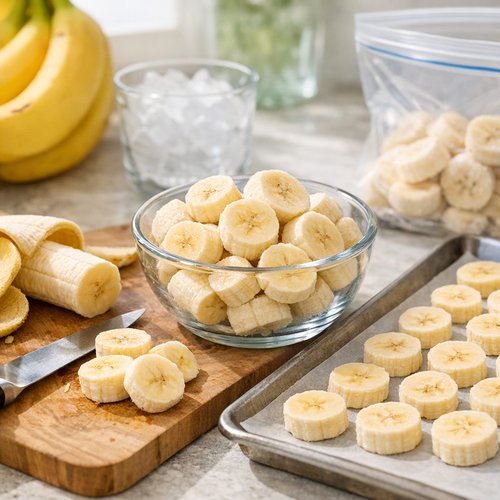
Here’s my registered dietitian confession: frozen bananas are genuinely superior to fresh ones in smoothies, both for nutrition and texture. When bananas freeze, their cell walls break down slightly, which actually makes certain nutrients more bioavailable. Plus, they create that creamy, thick consistency without needing as much ice. I slice my bananas into ¼-inch coins, spread them on a parchment-lined baking sheet, freeze for 2 hours until solid, then store them in a glass container for up to 3 months. Pro tip: do this Sunday night, and your entire week of smoothies is already half-prepared.
Step 2: Gather Your Wet Ingredients in the Blender Base
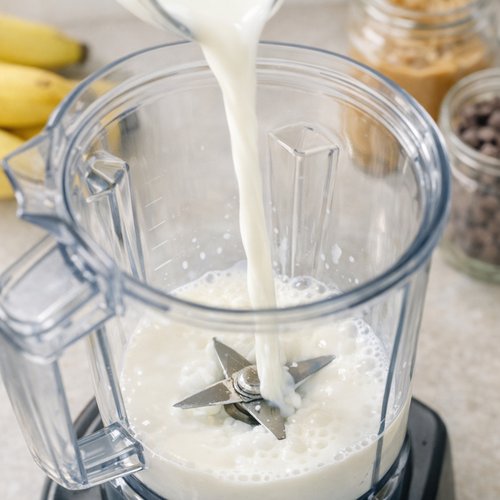
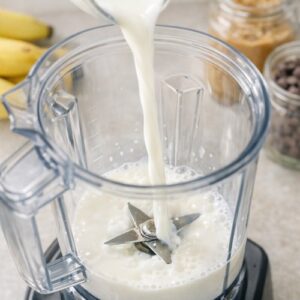
Pour your half-cup of milk directly into the blender pitcher first. This creates a liquid base that helps everything blend smoothly without getting stuck. Add your Greek yogurt and peanut butter right on top. The order matters because you’re creating layers that your blender will process efficiently. Don’t stir them yet—just let them sit for a moment.
Step 3: Add Your Frozen Bananas and Cocoa Powder
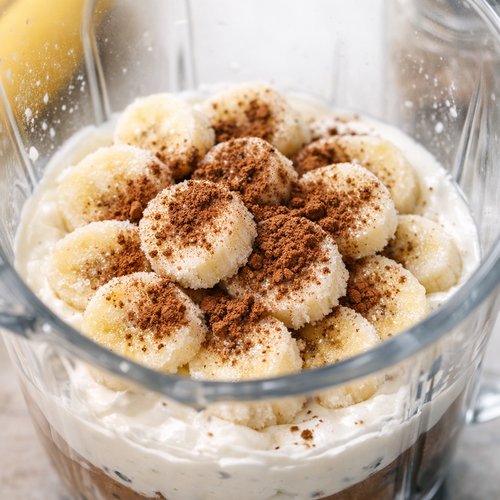
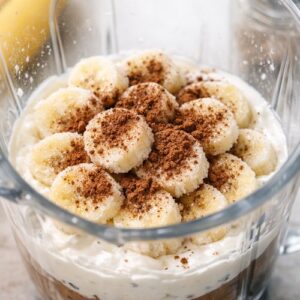
This is where the comfort tradition meets modern nutrition. Arrange your frozen banana slices on top of the yogurt mixture. Sprinkle your cocoa powder evenly across the bananas. Add your pinch of sea salt. If you’re using honey for extra sweetness, drizzle it in now. The visual contrast of the dark cocoa powder on pale bananas reminds me of my grandmother’s kitchen—where ingredients were treated with respect and purpose.
Step 4: Top with Ice and Blend
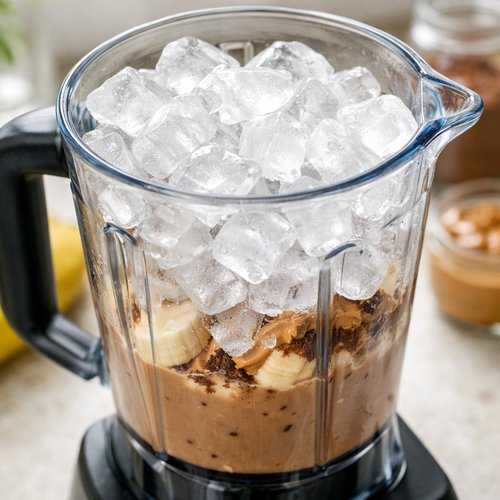
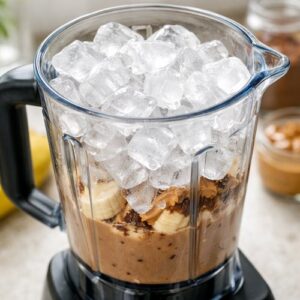
Add your ice cubes on top—they should fill the pitcher about ¾ full. Set your blender to high speed and blend for 60-90 seconds. You’re looking for a silky, completely smooth texture with no lumps or icy bits. If you have a lower-powered blender, add an extra ¼ cup of milk before starting. Listen to the sound—when it shifts from a grinding noise to a smooth whirring sound, you’re done.
Step 5: Pour and Enjoy Immediately
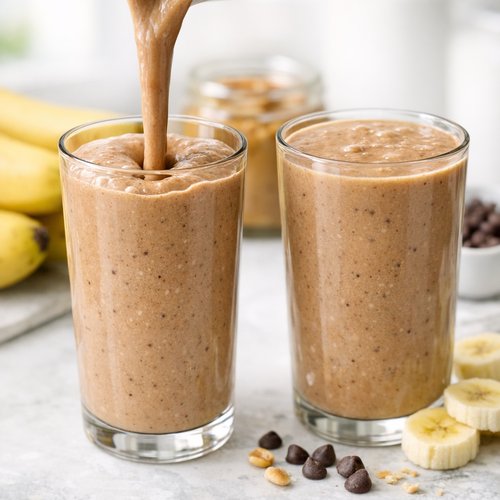
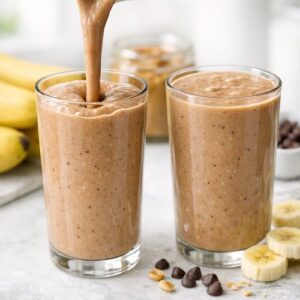
Pour into tall glasses right away and serve immediately. The beauty of this smoothie is that it’s best enjoyed fresh, when it still has that cool, creamy texture. I always make mine while my coffee is brewing, so I have a nourishing breakfast drink ready by the time I sit down to work. This moment—taking five minutes to properly nourish myself before diving into the day—is when I feel most aligned with my grandmother’s philosophy of feeding people with intention and care.
Expert’s Nutritional Insight: The Peanut Butter Power Play
As a registered dietitian, I want to highlight something that often gets overlooked: the specific type of peanut butter you choose matters significantly for this smoothie’s nutritional profile. Natural peanut butter (the kind where oil separates and sits on top) contains more polyphenols and has a lower glycemic impact than conventional peanut butter, which is loaded with added sugars and hydrogenated oils. The fat content you might worry about? It’s actually crucial for absorbing fat-soluble vitamins like vitamins A, D, and E. One ¼ cup serving gives you approximately 8 grams of plant-based protein plus the kind of healthy fat that keeps you satisfied for hours. This isn’t indulgence masquerading as health—this is legitimate nutrition that tastes incredible.
Make-Ahead Guide: Your Weekly Smoothie Strategy
I’ve built my entire smoothie routine around the reality that mornings are chaotic. Here’s exactly how I prep so that making this smoothie takes 90 seconds flat:
- Sunday Night Prep: Slice 8-10 bananas into coins, freeze them solid on a sheet pan, then transfer to a glass container. Measure your cocoa powder into small glass jars (2 tablespoons per jar). Label them with masking tape. Store everything in your freezer.
- Wednesday Night Refresh: If you’re making smoothies daily, prepare fresh Greek yogurt and milk measurements in a small container. This takes two minutes and ensures you have exact portions ready to grab.
- Storage Timeline: Frozen bananas stay fresh for up to 3 months. Cocoa powder lasts indefinitely in an airtight container. Greek yogurt stays good for 7-10 days after opening. This means one Sunday of prep work gives you 4-6 weeks of quick breakfasts.
- Travel Hack: If you need to drink your smoothie on the go, pour it into a travel tumbler immediately and store in an insulated lunch bag for up to 4 hours without significant texture degradation. The ice and frozen bananas work together to keep everything cold.
How to Customize the Fusion Ratio
This recipe is perfectly balanced as written, but I love how adaptable it is. Depending on what your body needs that particular day, you can lean more into one tradition than the other:
- More Comfort Indulgence: Add 1 tablespoon of chocolate chips (or try a drizzle of natural almond butter on top), increase to 1 teaspoon of honey, and use whole milk instead of low-fat. This version tastes like pure dessert but still delivers substantial nutrition.
- More Athletic Performance Focus: Add an extra 2 tablespoons of Greek yogurt, reduce the honey to ½ teaspoon, and add a pinch of ground cinnamon (which studies show may improve glucose stability). This version is leaner but still delicious.
- Lighter Summer Version: Use ⅓ cup milk instead of ½ cup, add ⅓ cup cold water, and include a handful of fresh spinach (you won’t taste it, I promise). This creates a thinner texture perfect for hot mornings.
- Rich Chocolate Lover Version: Increase cocoa powder to 2.5 tablespoons and add 1 tablespoon of allulose or monk fruit sweetener for deeper chocolate notes without the glycemic impact.
Common Mistakes to Avoid (So Your Smoothie is Perfect Every Time)
I’ve made every smoothie mistake possible, and I’ve learned from each one. Here’s what I tell my clients to avoid:
- Using Warm Ingredients: When Greek yogurt or milk are room temperature, they warm your frozen bananas and ice, resulting in a thin, melted drink instead of the creamy texture you want. Always use cold ingredients straight from the fridge. Cold is non-negotiable.
- Over-Blending: More than 90 seconds of blending actually breaks down the protein structure of Greek yogurt, making your smoothie thin and separated. Blend until smooth, then stop. You’re not making ice cream.
- Skipping the Salt: I know it sounds strange, but ¼ teaspoon of sea salt elevates every other flavor and prevents the smoothie from tasting one-dimensional. Don’t skip it. Your taste buds will thank me.
- Frozen Bananas That Are Too Old: If your frozen bananas have been in the freezer for more than 4 months, they can develop freezer burn and take on a grainy texture. Rotate your stock and use the oldest bananas first. Label your containers with the freezing date.
Seasonal Variations: Adapting This Recipe Throughout the Year
This smoothie is fantastic year-round, but I love tweaking it with the seasons. Here’s how I keep it fresh:
- Spring: Add ½ teaspoon of fresh lemon zest to the blender (brightens everything) or use almond milk instead of dairy milk for a lighter feel as temperatures warm up.
- Summer: Reduce milk to ⅓ cup, add ⅓ cup of cold brew coffee for a chocolate-peanut butter mocha moment, and use the lighter version I mentioned above. It’s the most refreshing breakfast drink.
- Fall: Add ¼ teaspoon of pumpkin pie spice and 2 tablespoons of pure pumpkin puree for a seasonal twist that sounds indulgent but adds only 15 calories and boosts beta-carotene content.
- Winter: Add a pinch of cayenne pepper (trust me) and increase the honey to 1 teaspoon for warmth and depth. The subtle heat against the chocolate is incredible.
Other Great Comfort-Meets-Performance Fusion Recipes
If you love the concept of merging traditional comfort with modern nutrition, you’ll absolutely adore these other recipes that celebrate both philosophies:
- this simple cake – Proof that simple ingredients can deliver maximum flavor and nutrition when combined thoughtfully.
- Almond Butter Recipe – Another way to create nutrient-dense comfort food at home with just one ingredient and intention.
- my go-to banana bread – The ultimate minimal-ingredient approach to a nostalgic classic, perfect for using up those bananas.
- 3 Ingredient Nutella Recipe – Homemade chocolate-hazelnut spread that delivers actual nutrition alongside the decadence.
Can I Store Banana Chocolate Peanut Butter Smoothie Recipe?
The short answer: you can, but you probably shouldn’t. Smoothies are best enjoyed fresh, within 30 minutes of blending. The texture, temperature, and nutrient profile are all optimized in that window. However, real life happens, and sometimes you need flexibility. Here’s my professional guidance:
- Refrigerator Storage: If you must make ahead, pour your smoothie into a glass jar with an airtight lid and refrigerate for up to 24 hours. The liquid will separate slightly from the solids—just shake well before drinking. The protein and fat content means it won’t separate as dramatically as fruit smoothies.
- Freezer Storage: You can freeze prepared smoothies in ice cube trays, then pop the cubes out and blend with a splash of milk when you’re ready to drink. This works brilliantly if you prep on Sunday for the whole week. Use within 2 months.
- Individual Smoothie Packets: My favorite trick: freeze pre-portioned smoothie ingredient packs. Combine frozen bananas, cocoa powder, salt, and honey in labeled freezer bags, then grab one packet, add milk, yogurt, peanut butter, and ice to your blender. These packets stay fresh for 3 months.
Nutrition Information
Based on USDA nutritional analysis per serving (makes 2 servings):
- Calories: 285
- Protein: 12 grams (43% of daily value)
- Total Fat: 11 grams (14% of daily value, primarily healthy monounsaturated fats)
- Carbohydrates: 36 grams (12% of daily value)
- Fiber: 3 grams (12% of daily value)
- Calcium: 240 mg (19% of daily value)
- Potassium: 420 mg (12% of daily value)
- Iron: 1.2 mg (7% of daily value from cocoa)
From a registered dietitian perspective: the 12 grams of protein comes from a combination of Greek yogurt (whey protein) and peanut butter (plant-based protein), creating a complete amino acid profile. The 3 grams of fiber from the banana supports digestive health and glucose regulation. The polyphenols in cocoa powder provide antioxidant benefits that support cellular health—this is why I always use unsweetened cocoa powder rather than chocolate syrup. This smoothie delivers sustained energy for 4-5 hours due to the protein-to-carbohydrate ratio, making it legitimate breakfast, not a between-meal snack.
What to Serve With Banana Chocolate Peanut Butter Smoothie Recipe?
While this smoothie is substantial enough to be a complete breakfast on its own, I love pairing it with simple sides that complement the flavors. Here’s what I typically enjoy alongside:
- Whole Grain Toast with Natural Almond Butter: This combination echoes the peanut butter notes in your smoothie while adding extra fiber and complexity. The texture contrast between the creamy smoothie and toasted bread is genuinely satisfying.
- Greek Yogurt Parfait with Granola: If you want more substance, layer Greek yogurt with granola and fresh berries. The tanginess of the yogurt complements the richness of the smoothie perfectly.
- Hard Boiled Eggs: Sometimes I’ll enjoy one of my smoothies alongside two hard-boiled eggs for extra staying power. The eggs add savory balance to the sweet smoothie.
- Fresh Fruit Medley: A small bowl of sliced fresh strawberries or raspberries brightens the richness of the chocolate-peanut butter combination without feeling like too much breakfast.
- Simple Green Salad with Olive Oil Dressing: I know this sounds unconventional, but a light salad with lemon vinaigrette actually cleanses your palate between sips. Try it and see if you don’t love the interplay of flavors.

Banana Chocolate Peanut Butter Smoothie Recipe
Ingredients
Method
- Here's my registered dietitian confession: frozen bananas are genuinely superior to fresh ones in smoothies, both for nutrition and texture. When bananas freeze, their cell walls break down slightly, which actually makes certain nutrients more bioavailable. Plus, they create that creamy, thick consistency without needing as much ice. I slice my bananas into ¼-inch coins, spread them on a parchment-lined baking sheet, freeze for 2 hours until solid, then store them in a glass container for up to 3 months. Pro tip: do this Sunday night, and your entire week of smoothies is already half-prepared.
- Pour your half-cup of milk directly into the blender pitcher first. This creates a liquid base that helps everything blend smoothly without getting stuck. Add your Greek yogurt and peanut butter right on top. The order matters because you're creating layers that your blender will process efficiently. Don't stir them yet—just let them sit for a moment.
- This is where the comfort tradition meets modern nutrition. Arrange your frozen banana slices on top of the yogurt mixture. Sprinkle your cocoa powder evenly across the bananas. Add your pinch of sea salt. If you're using honey for extra sweetness, drizzle it in now. The visual contrast of the dark cocoa powder on pale bananas reminds me of my grandmother's kitchen—where ingredients were treated with respect and purpose.
- Add your ice cubes on top—they should fill the pitcher about ¾ full. Set your blender to high speed and blend for 60-90 seconds. You're looking for a silky, completely smooth texture with no lumps or icy bits. If you have a lower-powered blender, add an extra ¼ cup of milk before starting. Listen to the sound—when it shifts from a grinding noise to a smooth whirring sound, you're done.
- Pour into tall glasses right away and serve immediately. The beauty of this smoothie is that it's best enjoyed fresh, when it still has that cool, creamy texture. I always make mine while my coffee is brewing, so I have a nourishing breakfast drink ready by the time I sit down to work. This moment—taking five minutes to properly nourish myself before diving into the day—is when I feel most aligned with my grandmother's philosophy of feeding people with intention and care.
Notes
FAQs
Can I Use Regular Peanut Butter Instead of Natural Peanut Butter?
You absolutely can, and it will still taste delicious. However, conventional peanut butter contains added sugars and hydrogenated oils that impact both the nutrition profile and the smoothness of the blending process. Natural peanut butter requires no stirring in a smoothie because the high-powered blender incorporates everything seamlessly. If you use conventional peanut butter, the smoothie may taste slightly sweeter and thicker. My recommendation: try natural peanut butter for one week and taste the difference yourself. Once you notice how much creamier it is, you’ll probably stick with natural.
What if I Don’t Have Greek Yogurt—Can I Use Regular Yogurt?
Yes, but you’ll need to adjust quantities. Regular yogurt has less protein (about 3-4 grams per half cup versus 10+ grams for Greek yogurt), so use ¾ cup of regular yogurt instead of ½ cup to maintain comparable protein content. The texture will be slightly thinner, so you might want to add an extra ¼ cup of ice. The smoothie will still taste wonderful, just less creamy and with slightly less staying power throughout your morning.
Is This Smoothie Good for People with Nut Allergies?
Unfortunately, peanut butter is essential to this particular recipe’s flavor profile and nutritional balance. However, you can absolutely create a nut-free version using sunflower seed butter (which has a surprisingly similar flavor and texture), tahini (more neutral), or coconut butter (richer and more tropical). Sunflower seed butter is my top recommendation because it delivers the same satisfying richness. You’d use the same measurement (¼ cup) and the result is nearly indistinguishable from the original.
How Many Calories Does This Smoothie Actually Contain, and Is It Enough for Breakfast?
At approximately 285 calories per serving (570 total if you drink both servings), this smoothie provides 12 grams of protein, which is the magic number for breakfast satiety according to nutrition research. Most people feel satisfied for 4-5 hours after drinking this smoothie because of the protein-fat combination and the resistant starch in frozen bananas. If you’re training for athletics or doing intense physical work, you might pair it with toast or eggs. For most people with typical morning activities, this is a perfectly adequate breakfast that delivers energy without heaviness.
Can I Make This Smoothie Without a High-Powered Blender?
Standard blenders will work, but you’ll need to make a few adjustments. Use only 1 banana instead of 2 (high-powered blenders handle whole frozen bananas, regular blenders struggle). Increase milk to ¾ cup to help with processing. Let your frozen banana sit out for 5 minutes before blending so it’s slightly softer. Blend on high speed for 2-3 minutes instead of 60-90 seconds. You might get a slightly grainier texture—if so, strain through a fine mesh sieve if you’re particularly sensitive to texture. Honestly, if you’re planning to make this smoothie regularly, a high-powered blender like a Vitamix or Ninja is a worthwhile investment that pays for itself in smoothness and time saved.
What’s the Best Time of Day to Drink This Smoothie?
I make this for breakfast because the protein-to-carbohydrate ratio is optimized for morning energy and satiety. However, it works beautifully as a post-workout smoothie within 30 minutes of finishing exercise, when your muscles are primed to absorb protein. It’s also excellent as an afternoon pick-me-up if you’re experiencing the 3 p.m. energy slump. I don’t recommend it as a bedtime drink because the moderate caffeine in cocoa powder might affect sleep for sensitive individuals. If you want an evening smoothie, reduce cocoa powder to 1 tablespoon and add vanilla extract instead for sweetness.
More Fusion Recipes You’ll Love
- Almond Joy Recipe – Another chocolate-coconut-almond combination that merges nostalgic candy joy with real nutrition.
- this simple cake – Proof that you can have your indulgent cake and eat it healthfully too.
As I reflect on why I’m so passionate about recipes like this smoothie, it always comes back to a single belief: food is the most honest expression of how we care for ourselves and each other. My grandmother showed love through feeding people nourishing meals. I honor that legacy by understanding the science behind those meals, so I can feed people—including myself—in ways that are both deeply satisfying and genuinely good for their bodies.
This smoothie is my daily practice of that philosophy. It takes five minutes. It costs less than a fancy coffee. It tastes like a chocolate-peanut butter dream. And it keeps you energized and satisfied until lunch. That’s the fusion that matters most—not fancy cooking techniques or exotic ingredients, but simple food made with intention, understanding, and love.
Make this smoothie tomorrow morning. Notice how it makes you feel. Then make it again. And again. Let it become part of your routine—not because it’s trendy, but because it’s genuinely good. That’s when you’ll understand what I’m talking about.
Enjoy your cooking journey!