This post contains affiliate links. As an Amazon Associate I earn from qualifying purchases.
You know that crispy, smoky Bacon Asparagus from your favorite upscale steakhouse? The one you’ve been ordering as a side for years, watching them wrap each spear with care and return it golden and perfect? I became absolutely obsessed with recreating that magic at home—that perfect balance of tender asparagus wrapped in crispy, salty goodness. After months of testing and tweaking, I cracked the code. This isn’t just a copycat; it’s actually better than the restaurant version because you control every single element, and it costs a fraction of what you’d pay for three stalks on a fancy plate. If you’re looking to elevate your weeknight dinners or impress guests, this is the recipe that’ll have everyone asking, “Where did you learn to cook like this?”
Copycat Bacon Asparagus Recipe That Tastes Better Than the Restaurant Version
My obsession started on a spring evening when my mother and I were celebrating her birthday at a steakhouse in Austin. We ordered the asparagus wrapped in bacon as a shared appetizer, and I watched her eyes light up with each bite. The way the crispy bacon shattered between your teeth, how the asparagus stayed tender inside—it was restaurant magic on a plate. I spent that whole meal studying it, deconstructing it, asking the server a million questions (sorry, server!). When I got home, I knew I had to figure out how they did it.
What started as a casual kitchen experiment turned into a full-blown mission. I realized that steakhouses aren’t using secret ingredients—they’re using technique, temperature precision, and the right sequence of steps to achieve that contrast between crispy outside and tender inside. After seven different attempts, adjusting oven temperatures, bacon width, wrapping tension, and finishing methods, I finally nailed it. And honestly? The homemade version wins because I use fresh, local asparagus from the farmer’s market and quality bacon, which makes all the difference.
What Makes the Restaurant Version So Good
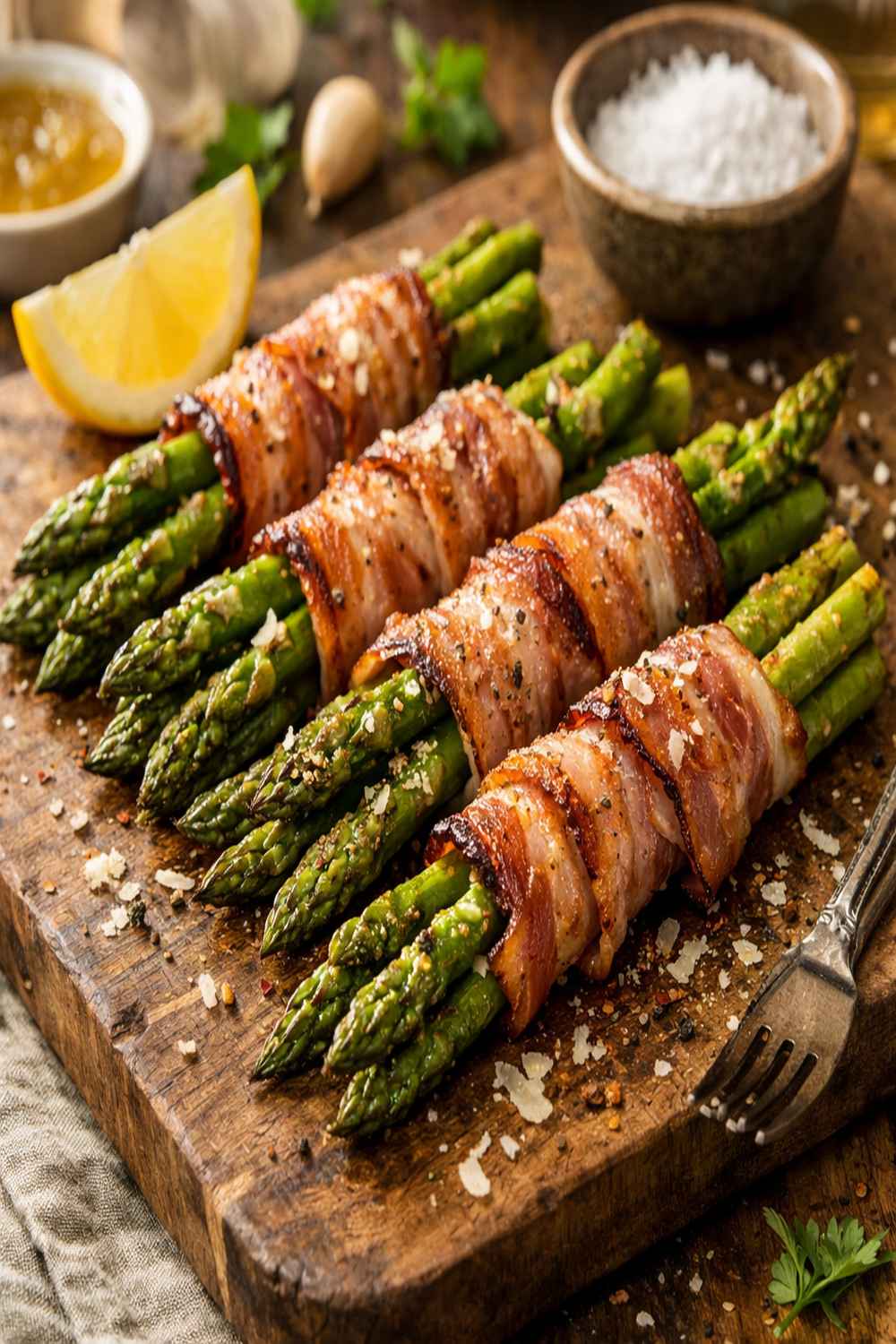
Steakhouse bacon asparagus is addictive because it plays with contrast—crispy against tender, salty against fresh, smoke against green. When I worked with my grandmother preparing meals for family gatherings, she taught me that the best dishes aren’t complicated; they’re just intentional about texture and flavor balance. That’s exactly what restaurants get right here.
The restaurant version succeeds because of a few specific elements: they use thick-cut bacon that has enough fat to render properly without burning, they wrap it at just the right tension (not too tight to squeeze the asparagus, not too loose to separate), and they finish it with high heat to create that shattered, crispy exterior. The seasoning is restrained but strategic—just enough salt and garlic to enhance without overwhelming the natural vegetable flavor.
- The two-stage cooking method – they bake low and slow first to render the bacon fat and cook the asparagus through, then blast it with high heat or broiler to crisp everything up without drying out the spear inside
- Premium bacon selection – restaurants use thick-cut, quality bacon with good fat distribution, not the thin stuff that burns instantly
- Minimal but perfect seasoning – garlic salt and fresh cracked pepper, nothing else needed because the ingredient quality speaks for itself
How This Homemade Version Compares
Here’s my honest assessment: the homemade version absolutely wins on freshness, cost, and customization. You’re using asparagus that’s been picked days, not weeks, before cooking. Your bacon can be a premium brand you actually love. And you can adjust the seasoning, the bacon thickness, and the doneness level exactly to your preference. Restaurants are locked into consistency—they need every plate to look identical. You get to play with variables.
Where restaurants have a tiny edge: they have commercial convection ovens that distribute heat more evenly, and they can batch multiple orders simultaneously, which they’ve perfected through repetition. But that’s honestly negligible. Once you do this recipe three times, you’ll have the technique down better than most line cooks, and your ingredient quality will surpass what they’re using at scale.
The cost difference is staggering. A restaurant charges $12-16 for about four ounces of this dish. You can make a beautiful portion for under $2 at home, using better ingredients. That’s the kind of gap that makes me want to cook at home more often.
The Ingredients – Reverse-Engineered
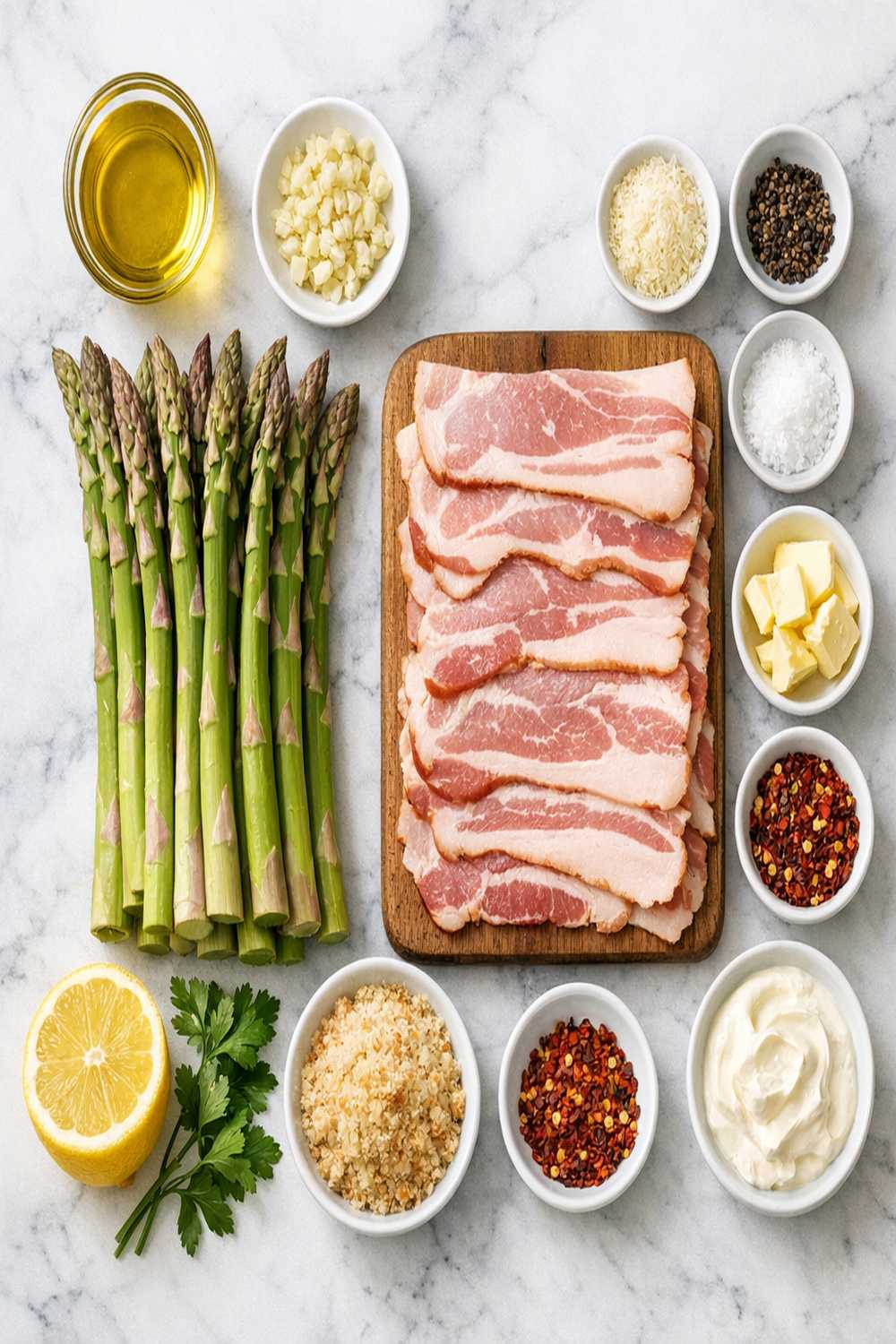
I figured out these ingredients through systematic testing and by talking to a friend who works in restaurant kitchens. I’d make the dish, taste it carefully, identify what was missing, and adjust. The magic is that there aren’t many ingredients—which means each one has to be high quality and intentional. I’ve listed them here with notes on why each one matters for replicating that steakhouse experience.
- 1 teaspoon extra virgin olive oil (just enough to help seasonings adhere, no more)
- ¼ teaspoon freshly cracked black pepper (grind it yourself right before cooking for maximum impact)
- ¼ teaspoon garlic salt (this is the secret—garlic salt, not separate garlic and salt, keeps it simple and balanced)
- 12 slices quality thick-cut bacon (the good stuff with visible fat marbling, not the packaged thin strips)
- 24 fresh asparagus stalks, about 10 ounces when trimmed (thin to medium thickness, not the giant ones that take forever to cook through)
Serves: 4 as a beautiful side dish, or 2 as an indulgent appetizer for two
The Copycat Method: How to Recreate Bacon Asparagus Recipe at Home
Here’s where the restaurant secrets become your kitchen secrets. I’m going to walk you through each step exactly as I’ve reverse-engineered it, and I’ll point out the professional techniques that make the difference between “okay” and “people will ask for your recipe.”
Step 1: Prep Your Asparagus and Equipment
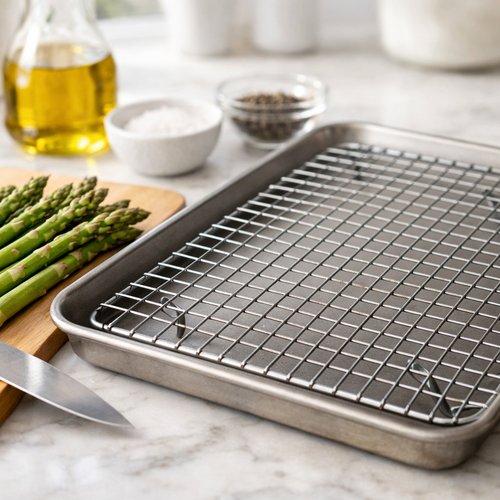
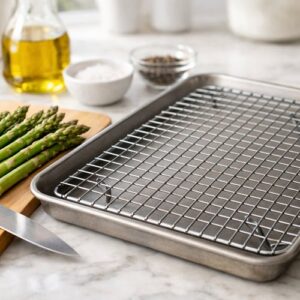
Start by preheating your oven to 400 degrees Fahrenheit (that’s 204 Celsius). While it’s warming, grab an oven-safe wire cooling rack and place it on top of a rimmed baking sheet. This setup is non-negotiable for restaurant-quality results—the rack allows hot air to circulate underneath, which helps render the bacon fat evenly and prevents the asparagus from steaming on the bottom.
Now prepare your asparagus. Hold each spear firmly at the base and bend it gently until it naturally snaps—this removes the woody, fibrous end that nobody wants to eat. You’ll typically lose about an inch or two per spear, which is completely normal. Rinse them under cool water and pat them completely dry with paper towels. This step matters because moisture is the enemy of crispiness, and we’re going for maximum crispiness here.
Step 2: Season the Asparagus (This Is Critical)
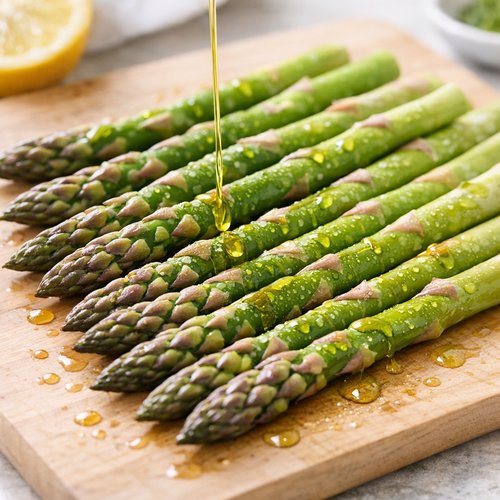
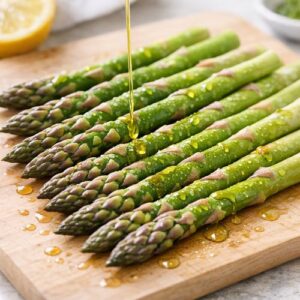
Lay your trimmed asparagus spears out on a clean cutting board or large plate. Drizzle them with the olive oil—and I mean lightly drizzle. You want just enough oil for the seasonings to stick, not to coat them in a slick. This isn’t a salad. Then sprinkle the garlic salt and fresh cracked pepper evenly across all the spears, rolling them as you go to ensure even distribution.
The reason restaurants use garlic salt instead of separate ingredients is efficiency and flavor consistency. Garlic salt already has the ratio balanced, so you get that garlic-forward flavor without overwhelming the delicate asparagus. If you can’t find quality garlic salt, you can make your own by mixing fine sea salt with garlic powder (1 teaspoon salt to ½ teaspoon powder).
Step 3: Cut and Wrap the Bacon
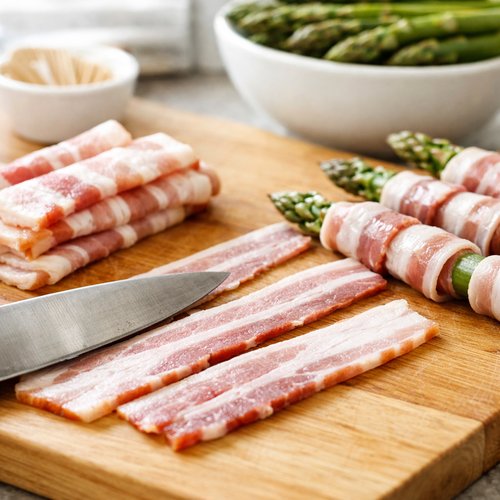
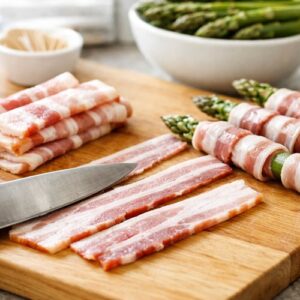
This is where technique becomes art. Take your bacon slices and cut each one lengthwise—basically splitting it into two long, narrow strips. This serves a specific purpose: thinner bacon strips wrap more securely without crushing the delicate asparagus inside, and they crisp up faster and more evenly. Plus, when the bacon shrinks during cooking (and it will), these narrower strips create that beautiful striped pattern you see on restaurant plates.
Now wrap one bacon strip tightly around each asparagus spear, starting at the base and spiraling upward. The key word is “tightly”—tight enough to stay in place, but not so tight that you’re squeezing the asparagus itself. Think of it like wrapping a gift: secure but not strangling. You’re aiming for about two-and-a-half wraps per spear. When the bacon shrinks, it’ll tighten naturally and create these gorgeous, even striped lines.
Step 4: Arrange on the Rack, Seam Side Down
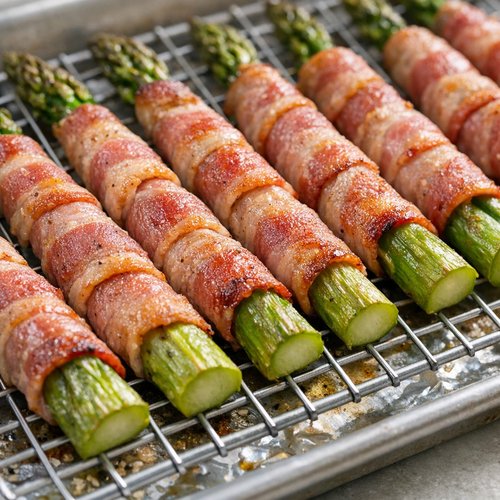
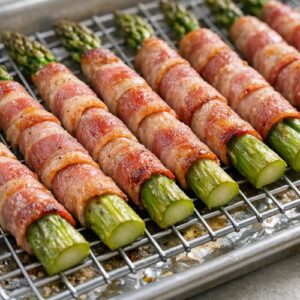
Place each bacon-wrapped asparagus spear on your prepared wire rack, with the bacon seam facing downward. This prevents the bacon from unraveling during cooking and helps it crisp up as it makes contact with the hot rack. Arrange them in a single layer without crowding—they should have a tiny bit of space between them for air circulation.
This is the part where restaurant kitchens have an advantage with their commercial equipment, but honestly, a standard home oven works beautifully once you understand the principle: you’re creating an environment where heat can reach all sides of the bacon. The rack does that for you.
Step 5: The Initial Bake (Rendering Phase)
Pop your sheet in that preheated 400-degree oven for 10 minutes. During this phase, the bacon fat is rendering out, the asparagus is starting to cook through, and flavors are developing. You’ll start to smell that smoky, salty aroma that makes you know you’re doing something right.
Don’t open that oven door to check on them—I know it’s tempting, but every time you open it, you release heat and disrupt the cooking process. Trust the process.
Step 6: Flip and Continue Cooking
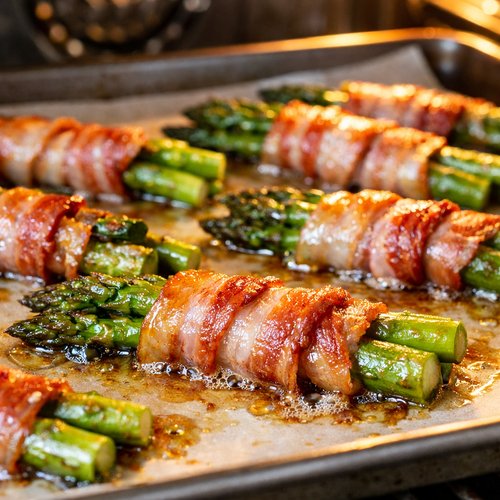
After 10 minutes, use tongs to carefully flip each bundle so the seam side faces up. Now the other side of the bacon gets direct heat exposure. Return them to the oven for another 5-10 minutes. The wide range here depends on how crispy you like your bacon and how thick your asparagus stalks are. Thinner stalks might be done in 5 minutes; thicker ones might need closer to 10.
I typically go for about 7 minutes, which gives me asparagus that’s tender-crisp (not mushy) and bacon that’s mostly crispy but still has a tiny bit of chew.
Step 7: The Broiler Finish (The Restaurant Secret Weapon)
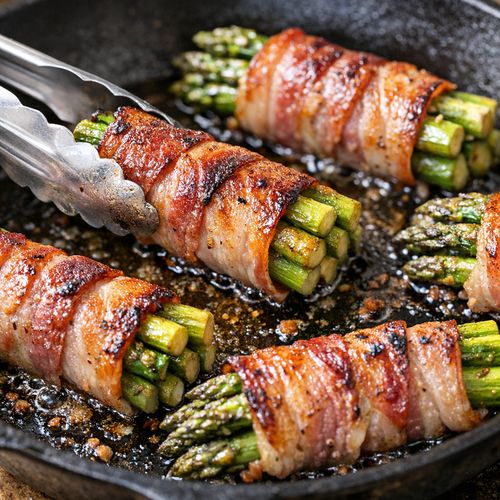
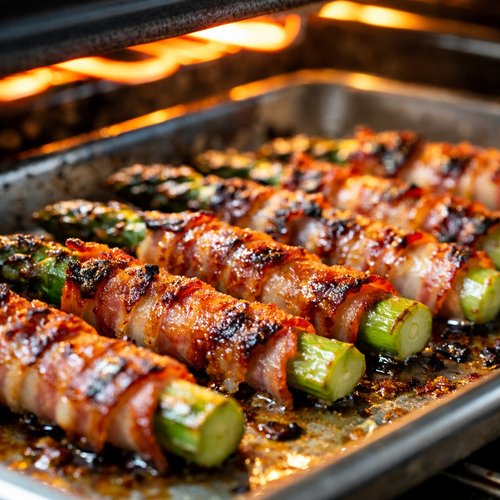
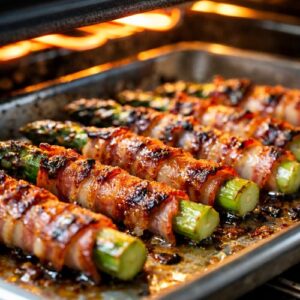
This is the step that separates good from restaurant-quality. After your second bake, switch your oven to the broil setting and return the sheet to the oven for just 1-2 minutes. The broiler delivers intense, direct heat from above, which shatters the bacon crispy without drying out the asparagus inside. It’s quick—literally 1 to 2 minutes maximum, or your bacon goes from crispy to burned.
Watch it the whole time. You’re looking for the bacon to go from “mostly cooked” to “golden and shattered crispy.” The moment it reaches that point, pull it out. This broiler finish is exactly what restaurants do with their high-powered equipment, and it’s the final touch that makes this taste like you paid $14 for three spears at a steakhouse.
The Secret Sauce/Seasoning Blend
Let me be honest: there is no secret sauce here. That’s actually what makes this recipe so elegant. It’s pure, focused flavor built on garlic salt and fresh cracked pepper, nothing else. As a registered dietitian, I’m trained to think about flavor compounds and how they interact, and this simple combination is actually genius because it highlights what asparagus naturally offers—its subtle sweetness and vegetal earthiness.
The garlic salt does the heavy lifting. It’s about one part garlic powder to four parts fine sea salt, and when you sprinkle it on the warm asparagus, that salt dissolves into the moisture on the surface, carrying garlic flavor throughout. The pepper adds a sharp, slightly spicy note that cuts through the richness of the bacon fat.
Some restaurants add a tiny bit of smoked paprika or cayenne, but in my testing, I found that complicates the flavor rather than enhancing it. The asparagus, bacon, and salt-garlic-pepper trinity are enough. It’s the kind of restraint my grandmother always preached—when you have good ingredients, don’t muddy them up.
Pro tip: Always crack your pepper fresh, right before cooking. Pre-ground pepper loses its volatility and impact. Whole peppercorns cracked in a mill taste exponentially better, and this dish is simple enough that every element matters.
How to Make It Even Better Than the Original
Once you’ve nailed the copycat version, here’s where you get to make it your own and actually surpass the restaurant version in some ways:
- Source from the farmers market – Fresh-picked asparagus (sometimes picked that very morning) has a completely different flavor profile than the restaurant’s pre-packed supply. The natural sweetness is brighter, the texture is firmer. This is my number-one upgrade.
- Add a finishing touch – After pulling from the broiler, while everything is still hot, I sometimes add a tiny squeeze of fresh lemon juice (just a whisper) or a pinch of finishing sea salt. This creates a brightness that elevates the whole dish without changing the essential character.
- Use heritage or specialty bacon – Try applewood-smoked bacon, or go to a local butcher and ask for their best thick-cut option. A really good bacon with proper fat distribution changes everything.
- Roast at a slightly higher temperature – Some home cooks prefer 425 degrees with shorter cook times. It’s a bit more aggressive but can give you crispier results. Just watch carefully to prevent burning.
Cost Comparison: Home vs Restaurant
Let me do the math here because it’s eye-opening. A typical steakhouse charges $14-16 for a four-ounce portion of bacon asparagus. That’s about four to five spears with bacon wrapping.
Here’s what it costs to make at home (based on current grocery prices in Texas):
- Fresh asparagus from farmers market: $3-4 per pound, and you get about 2 pounds easily, so roughly $3.50 for what we’re using
- Quality thick-cut bacon: about $6-8 per pound, and you’re using about 0.75 pounds, so roughly $5.50
- Olive oil and seasonings: negligible, maybe 25 cents
- Total per batch (4 servings): about $9.25
- Per serving: $2.31
You’re saving $11-14 per person. If you make this once a week for a year (52 times), you’re saving between $572-728 compared to ordering it at restaurants. And that’s using really good ingredients. If you’re less precious about your ingredient sourcing, you could do it for under $1.50 per serving.
This is the kind of recipe that makes home cooking feel less like a chore and more like an economical indulgence.
Can I Store Bacon Asparagus Recipe?
This is a dish best enjoyed the day it’s made, when the bacon is at peak crispiness. That said, I understand real life doesn’t always work that way, so here’s what I know from experience:
Room temperature storage: These will keep in an airtight container at room temperature for up to 2 hours and still taste good, though the bacon loses some crispness.
Refrigerator storage: In an airtight container, they’ll last up to 4 days, but texture degrades. The bacon becomes chewy rather than crispy, and the asparagus softens slightly.
Reheating tips: If you do refrigerate and want to reheat, use your toaster oven at 350 degrees for about 5 minutes. This revives the crispiness better than a microwave, which makes everything soggy.
Freezer storage: I don’t recommend freezing these. The asparagus texture suffers significantly upon thawing.
Make-ahead strategy: Instead, I suggest wrapping your asparagus in bacon the night before, storing it on a parchment-lined plate in the fridge, and then baking fresh the day you serve it. This gives you all the prep convenience of make-ahead cooking without sacrificing texture. You can have these in the oven 15 minutes before you need them.
Nutrition Information
Here’s the nutrition breakdown per serving (based on USDA FoodData Central for standard asparagus, bacon, and olive oil), assuming the recipe makes 4 servings:
- Calories: approximately 185
- Protein: 12 grams
- Fat: 14 grams (mostly from bacon; includes some healthy monounsaturated fat from olive oil)
- Carbohydrates: 3 grams
- Fiber: 1.5 grams
- Sodium: 420 mg (mostly from bacon and garlic salt)
Expert’s Nutritional Tip: As a registered dietitian, I want to highlight something important: asparagus is genuinely one of nature’s nutritional superstars. It’s rich in folate, vitamins K and C, and glutathione, which is a powerful antioxidant. Wrapping it in bacon doesn’t negate these benefits—it actually helps your body absorb the fat-soluble vitamins like vitamin K better because of the bacon fat. This is a legitimately nutritious dish, not just a decadent one. The protein from the bacon also makes this surprisingly satiating for just 185 calories.
Compared to restaurant versions (which often use more oil and larger portions), this homemade version is actually leaner and more controlled. Restaurant versions typically clock in around 250-300 calories per serving.
What to Order/Make Alongside for the Full Experience
If you want to recreate the full steakhouse experience at home, you need some supporting players. When my mother celebrates birthdays now, we do the whole steakhouse meal—and it costs a fraction of going out.
- A beautiful grilled or air-fried steak – Bacon asparagus is a perfect side to an Air Fryer Steak Recipe Medium Rare, which gives you restaurant quality without the price tag
- Loaded baked potato or twice-baked potato – The creamy, buttery potato is the perfect complement to this crispy, savory asparagus
- A simple green salad – Just mixed greens with a light vinaigrette. The acidity cuts through the richness perfectly
- Garlic bread or a warm roll – For soaking up any pan drippings or just because it’s steakhouse tradition
Common Mistakes to Avoid
I’ve made every mistake in the book while perfecting this recipe, so let me save you the frustration:
- Wrapping too tightly: I learned this the hard way—if you squeeze the asparagus while wrapping, you bruise it and it releases moisture, which prevents it from getting tender-crisp. Wrap firmly but gently, like you’re cradling something precious.
- Using thin bacon: Thin bacon crisps too fast, burns easily, and doesn’t have enough fat to render properly. Spend the extra dollar per pound and get thick-cut. Your whole dish depends on it.
- Skipping the broiler finish: I know it feels like an extra step, but this is what separates “pretty good” from “steakhouse good.” Don’t skip it. Just watch carefully.
- Overcrowding the baking sheet: If your asparagus spears are touching or overlapping, they steam instead of roasting. Space them out. You might need two baking sheets, which is fine.
Seasonal Variations
While bacon asparagus is technically a spring vegetable dish (asparagus season peaks March-May), you can adapt this technique throughout the year:
Spring: Use thin, tender asparagus and maybe add a whisper of lemon zest at the end. This is the canonical version.
Summer: Try wrapping fresh green beans the same way. They’re similar in structure and cook about the same amount of time. You could also do thicker asparagus at the end of the season, which is still delicious and more forgiving if slightly thicker.
Fall/Winter: Wrap baby carrots or Brussels sprout “spears” (halved lengthwise) with bacon using the same method. Carrots take about 20 minutes total, Brussels sprouts about 25 minutes. The bacon-roasted vegetable concept is endlessly adaptable.

Bacon Asparagus Recipe
Ingredients
Method
- Start by preheating your oven to 400 degrees Fahrenheit (that's 204 Celsius). While it's warming, grab an oven-safe wire cooling rack and place it on top of a rimmed baking sheet. This setup is non-negotiable for restaurant-quality results—the rack allows hot air to circulate underneath, which helps render the bacon fat evenly and prevents the asparagus from steaming on the bottom. Now prepare your asparagus. Hold each spear firmly at the base and bend it gently until it naturally snaps—this removes the woody, fibrous end that nobody wants to eat. You'll typically lose about an inch or two per spear, which is completely normal. Rinse them under cool water and pat them completely dry with paper towels. This step matters because moisture is the enemy of crispiness, and we're going for maximum crispiness here.
- Lay your trimmed asparagus spears out on a clean cutting board or large plate. Drizzle them with the olive oil—and I mean lightly drizzle. You want just enough oil for the seasonings to stick, not to coat them in a slick. This isn't a salad. Then sprinkle the garlic salt and fresh cracked pepper evenly across all the spears, rolling them as you go to ensure even distribution. The reason restaurants use garlic salt instead of separate ingredients is efficiency and flavor consistency. Garlic salt already has the ratio balanced, so you get that garlic-forward flavor without overwhelming the delicate asparagus. If you can't find quality garlic salt, you can make your own by mixing fine sea salt with garlic powder (1 teaspoon salt to ½ teaspoon powder).
- This is where technique becomes art. Take your bacon slices and cut each one lengthwise—basically splitting it into two long, narrow strips. This serves a specific purpose: thinner bacon strips wrap more securely without crushing the delicate asparagus inside, and they crisp up faster and more evenly. Plus, when the bacon shrinks during cooking (and it will), these narrower strips create that beautiful striped pattern you see on restaurant plates. Now wrap one bacon strip tightly around each asparagus spear, starting at the base and spiraling upward. The key word is "tightly"—tight enough to stay in place, but not so tight that you're squeezing the asparagus itself. Think of it like wrapping a gift: secure but not strangling. You're aiming for about two-and-a-half wraps per spear. When the bacon shrinks, it'll tighten naturally and create these gorgeous, even striped lines.
- Place each bacon-wrapped asparagus spear on your prepared wire rack, with the bacon seam facing downward. This prevents the bacon from unraveling during cooking and helps it crisp up as it makes contact with the hot rack. Arrange them in a single layer without crowding—they should have a tiny bit of space between them for air circulation. This is the part where restaurant kitchens have an advantage with their commercial equipment, but honestly, a standard home oven works beautifully once you understand the principle: you're creating an environment where heat can reach all sides of the bacon. The rack does that for you.
- Pop your sheet in that preheated 400-degree oven for 10 minutes. During this phase, the bacon fat is rendering out, the asparagus is starting to cook through, and flavors are developing. You'll start to smell that smoky, salty aroma that makes you know you're doing something right. Don't open that oven door to check on them—I know it's tempting, but every time you open it, you release heat and disrupt the cooking process. Trust the process.
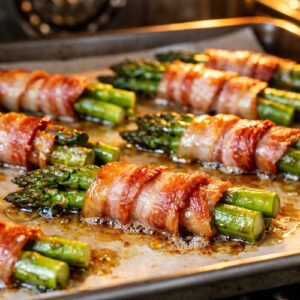
- After 10 minutes, use tongs to carefully flip each bundle so the seam side faces up. Now the other side of the bacon gets direct heat exposure. Return them to the oven for another 5-10 minutes. The wide range here depends on how crispy you like your bacon and how thick your asparagus stalks are. Thinner stalks might be done in 5 minutes; thicker ones might need closer to 10. I typically go for about 7 minutes, which gives me asparagus that's tender-crisp (not mushy) and bacon that's mostly crispy but still has a tiny bit of chew.
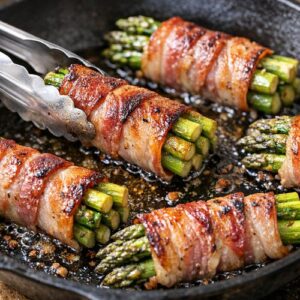
- This is the step that separates good from restaurant-quality. After your second bake, switch your oven to the broil setting and return the sheet to the oven for just 1-2 minutes. The broiler delivers intense, direct heat from above, which shatters the bacon crispy without drying out the asparagus inside. It's quick—literally 1 to 2 minutes maximum, or your bacon goes from crispy to burned. Watch it the whole time. You're looking for the bacon to go from "mostly cooked" to "golden and shattered crispy." The moment it reaches that point, pull it out. This broiler finish is exactly what restaurants do with their high-powered equipment, and it's the final touch that makes this taste like you paid $14 for three spears at a steakhouse.
Notes
FAQs
Can I make this in an air fryer instead of the oven?
Absolutely! Air fryers are actually fantastic for this because of the circulating hot air. Wrap your asparagus exactly as described, then air fry at 375 degrees for about 10-12 minutes, shaking the basket or flipping halfway through. You might skip the broiler step since air fryers already achieve that crispy exterior. I’d start checking at 10 minutes because every air fryer runs slightly different. If you want to explore more air fryer techniques, check out our my holiday turkey guide, which uses similar principles.
What if my asparagus is really thick or really thin?
Thickness matters for cooking time. Thin asparagus (like pencil-thin) might be done in as little as 15 minutes total; thick asparagus might need 20-22 minutes. The test is simple: pierce one with a fork. It should be tender but still have a tiny bit of resistance. Thicker spears are actually easier to wrap because they’re sturdier and less likely to break. If you have a mix of thicknesses, you can separate them and stagger them into the oven—thinner ones in for the last 5 minutes.
Can I prepare these the night before and cook them the next day?
Yes, and this is my preferred make-ahead strategy! Wrap your asparagus in bacon on a parchment-lined sheet, cover it loosely with plastic wrap, and refrigerate. The next day, let them come to room temperature for about 10 minutes, then proceed with the cooking method. They actually cook slightly more evenly this way because they’re not going from cold fridge straight to hot oven.
What if I can’t find good quality asparagus?
Honestly, this recipe really does highlight the quality (or lack thereof) of your asparagus. If your market has sad, limp asparagus, I’d either wait for asparagus season (spring) or substitute with green beans or fresh baby carrots, which you can find good quality year-round. The bacon technique works beautifully on any of these vegetables. The asparagus itself is the star—if you’re stuck with mediocre asparagus, choose a different vegetable.
How do I get my bacon extra crispy without burning the asparagus?
This is the balancing act! The broiler step is your friend here. If you want maximum bacon crispness, extend the second baking phase to 10 minutes (instead of 5-7), then do a longer broiler finish of 2-3 minutes, but watch constantly. The asparagus will be very tender at this point, almost soft, but it won’t be burned. Alternatively, some people pull just the bacon off after the second bake, place it on a separate rack to finish under the broiler for an extra minute while the asparagus stays warm in the oven. It’s fussy, but if you’re a bacon crispy obsessive, it works.
More Restaurant Copycat Recipes
- Air Fryer Steak Recipe Medium Rare – Perfect protein pairing to complete your steakhouse experience at home
- Air Fry Pork Belly Recipe – Another crispy-edged, tender-inside technique that uses similar principles to this bacon asparagus method
There’s something deeply satisfying about cracking the code on a restaurant dish you love. It’s not about being frugal (though the savings don’t hurt). It’s about understanding why something tastes the way it does and then making it better in your own kitchen with ingredients you’ve chosen, techniques you’ve learned, and adjustments that match your exact preferences.
This bacon asparagus recipe has become something my friends request specifically. When we gather around my table, these spears mean hospitality—the same kind my mother and grandmother showed me through their cooking. The restaurant version that started this whole journey? I haven’t ordered it in two years. Why would I, when this tastes better and costs a tenth as much?
Your turn. Give this a try this weekend. Watch the magic happen as bacon renders and asparagus turns tender-crisp. Feel that moment when you pull it from the broiler and see it shattered and golden. Taste it while it’s still warm, and remember that you just made steakhouse-quality food in your own kitchen.
Enjoy your cooking journey!