
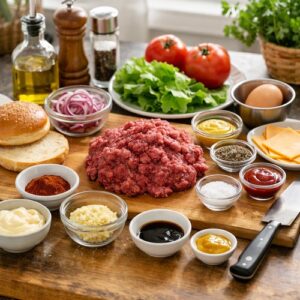
Ingredients
Method
Step 1: Prepare Your Ingredients and Space
- Before you touch the meat, gather everything you need in one place. This is called mise en place, and it's a professional cooking habit that prevents mistakes. Pull your pound of bison from the refrigerator and let it sit on the counter for about five minutes—not so long that it becomes warm, but long enough that it's not ice-cold and hard to work with. Cold meat is actually harder to season evenly because the fat particles don't distribute well. While the meat relaxes slightly, measure out all your spices into a small bowl: the salt, pepper, garlic powder, onion powder, smoked paprika, dried parsley, and cayenne. This takes two minutes and prevents you from fumbling with spice jars while your hands are covered in raw meat.
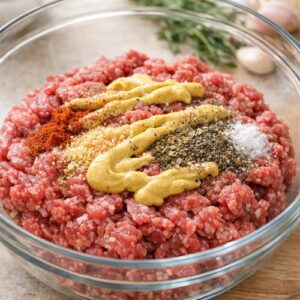
Step 2: Combine the Meat and Seasonings
- Place your bison meat into a large mixing bowl. Drizzle the Dijon mustard over the top, then sprinkle all your measured spices across the surface. This is the moment where beginners often hesitate, worried about messing up. Here's what I want you to know: you're about to use your clean hands to combine these ingredients, and this is where all the magic happens. Wash your hands with cool water first—the temperature matters because you want to keep the meat as cool as possible while working with it. Using your hands, gently fold and turn the mixture, breaking up the meat as you go. You're looking for a point where the color becomes uniform throughout and the spices are evenly distributed. This takes about one minute of mixing. Don't squeeze or pound the meat aggressively; you're mixing, not kneading bread. Aggressive handling creates a dense burger that feels tough to bite into. Instead, imagine you're folding air into the mixture and treating the meat with respect.
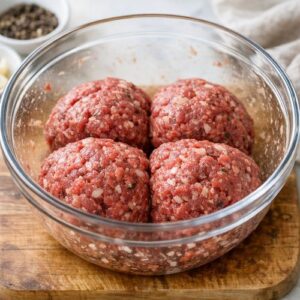
Step 3: Form Your Patties
- Divide your mixed meat into four equal portions. The easiest way is to imagine your bowl is divided into four sections and portion accordingly. Take one portion in your hands and gently pat it into a disc shape. You want four patties that are each about 3 inches in diameter and roughly ½ inch thick. This size is important because it cooks evenly and stays juicy. Once you've shaped the patty, use your thumb to make a shallow dimple in the center—about the size of a dime. This dimple is essential. As the burger cooks, it will puff up slightly, and this dimple prevents it from becoming a dome-shaped ball that cooks unevenly. The dimple keeps your burger flat and ensures the top and bottom cook at the same rate. Place each finished patty on a plate. Do not refrigerate the patties right before cooking; you want them cool but not cold, so they cook through gently rather than getting a char on the outside while staying cool inside.
Step 4: Heat Your Cooking Surface
- Whether you're using an outdoor grill, a grill pan on your stovetop, or an electric grill, the goal is the same: medium-high heat. This typically means a grill temperature around 375-400°F if you're measuring with a thermometer. If you don't have a thermometer, you can test the heat by holding your hand about 4 inches above the surface. You should be able to hold it there for about three seconds before the heat forces you to pull away. Don't skip the preheating step. A properly heated cooking surface sears the outside of the burger immediately, creating a flavorful crust while the inside cooks gently.
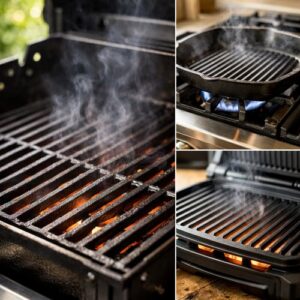
Step 5: Oil Your Cooking Surface
- Once your grill is properly heated, coat the surface lightly with avocado oil. Use a brush or a folded paper towel to distribute a thin, even coating. The oil prevents sticking and contributes to those beautiful grill marks. This is not the time to be shy with the oil; a properly oiled grill surface is key to success. Wait about 30 seconds for the oil to heat and shimmer slightly, then you're ready for the burgers.
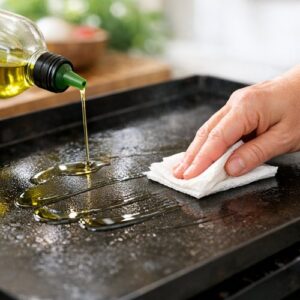
Step 6: Cook Your Burgers to Medium Doneness
- Place your four patties directly onto the heated cooking surface. You should hear a gentle sizzle—if it's silent, your grill wasn't hot enough, and if it's a violent pop, you might be a touch too hot. Don't touch them immediately. Let them cook undisturbed for about 4 minutes on the first side. This allows the proteins to firm up and create those beautiful grill marks without sticking. You can peek after 3 minutes if you're nervous, but resist the urge to flip or press. After 4 minutes, use a spatula to flip each patty carefully, and cook for another 4 minutes on the second side for medium doneness. If you're using a dual-contact electric grill (the kind that closes from above), the entire process takes about 4 minutes total with the lid down. Bison reaches medium doneness at an internal temperature of 160°F according to food safety guidelines, but if you're cooking by time and experience, 4 minutes per side on medium-high heat typically delivers perfect medium burgers.
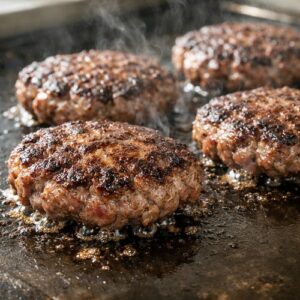
Step 7: Rest and Serve Immediately
- The moment your burgers reach doneness, transfer them directly to toasted buns or your serving vessel. Don't let them sit on the hot grill any longer than necessary; that's where they can dry out. The residual heat will continue cooking them slightly as they rest on the plate, so getting them off the heat promptly is crucial. Have your buns ready, your toppings assembled, and your plate set before you start cooking. This ensures your burgers go from grill to table while they're at peak temperature and juiciness.
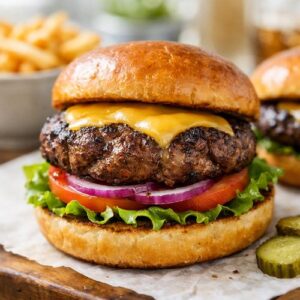
Notes
- 1 teaspoon smoked paprika (find this in the spice aisle; it should smell woodsy and slightly sweet, and one teaspoon delivers gorgeous color and depth)
- 1 teaspoon Diamond Crystal kosher salt (this specific brand dissolves evenly and seasons gently; table salt is too fine and can make the meat tough if you're not careful)
- 1 teaspoon dried parsley (the green flakes from your spice cabinet; it adds color and a whisper of freshness)
- 1 pound ground bison meat (look for meat that's a deep burgundy color, never gray or brown; it should smell fresh and clean, and ask the butcher counter when it was ground—ideally within the last two days)
- 1 teaspoon Dijon mustard (the kind in a jar near your condiments, not the bright yellow variety; it adds a subtle tang that enhances the bison without overwhelming it)
- 2 tablespoons avocado oil or another high-heat cooking oil (for coating your grill; avocado oil has a high smoke point and neutral flavor, which keeps the focus on the meat)