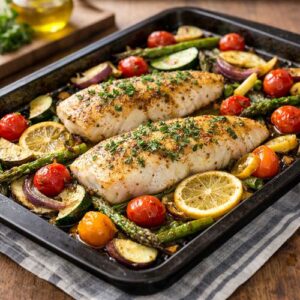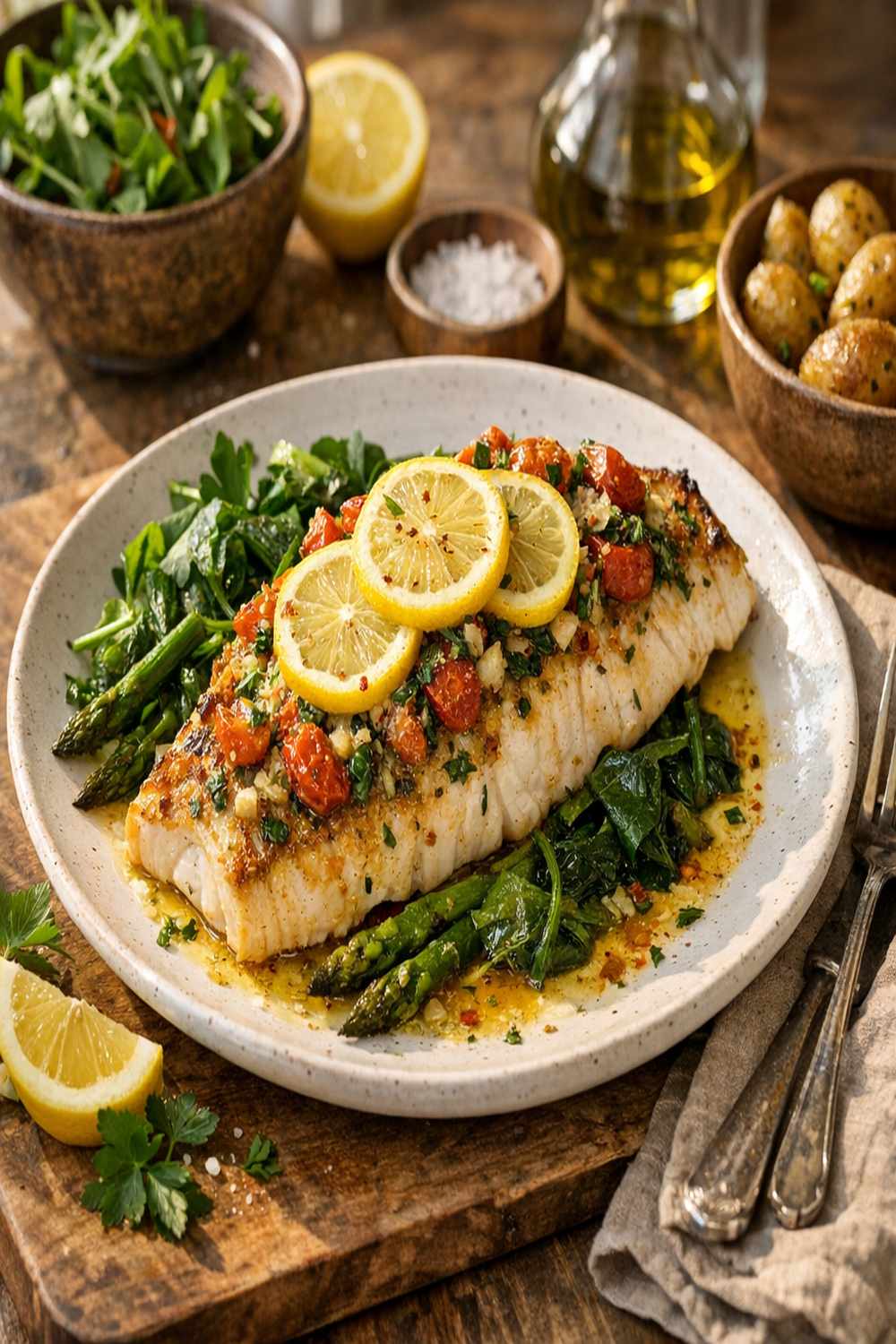

Ingredients
Method
Step 1: Prepare Your Oven and Baking Surface
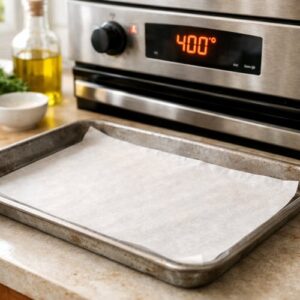
- Start by preheating your oven to 400°F (about 200°C). This moderate temperature is the sweet spot—hot enough to cook through in reasonable time, but not so hot that it shocks the delicate flesh. While your oven preheats, line a baking sheet with parchment paper. This matters because it prevents sticking, distributes heat evenly, and makes cleanup effortless. Don't skip this step thinking you'll just use butter or oil on a bare pan. Parchment is your secret weapon for perfectly released fish.
Step 2: Prepare the Fish Fillets
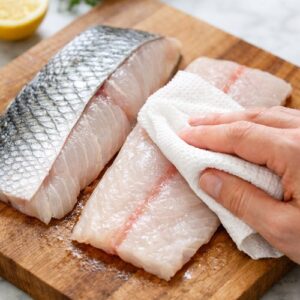
- Pat your barramundi fillets dry with paper towels. This is non-negotiable for achieving that beautiful, delicate crust. Any moisture on the surface will turn to steam, which prevents browning and can make the fish texture steamed rather than baked. Dry the fillets thoroughly, top and bottom, and arrange them on your prepared baking sheet skin-side down (if using skin-on). Leave at least an inch of space between each fillet so heat can circulate properly. Let the fillets sit at room temperature for about 5 minutes while you prepare the aromatic oil. Room temperature fish cooks more evenly than cold fish straight from the refrigerator—this is a professional technique that makes a real difference in even cooking.
Step 3: Create Your Aromatic Oil Coating
- In a small bowl, combine your extra-virgin olive oil, finely grated lemon zest, dried parsley, and fine sea salt. Stir gently but thoroughly, incorporating the zest and herbs into the oil. What you're doing here is creating a protective, flavorful emulsion that will regulate heat transfer and infuse the fish. Don't skip this mixing step—it ensures the aromatics are evenly distributed. The oil will look almost creamy from the zest particles suspended in it. This is perfect. If you're more visual, you'll notice the oil has turned a very pale yellow-green from the lemon zest—that's your indicator that the citrus oils are activating.

Step 4: Coat Each Fillet with the Aromatic Oil
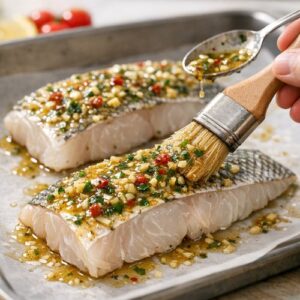
- Using a pastry brush or the back of a spoon, gently coat the top of each barramundi fillet with about half of your aromatic oil mixture. Be generous but not wasteful—you want enough that it pools slightly on the fish but not so much that it drips off the sides. The oil should coat the top surface completely, filling any small crevices. Grind a small pinch of fresh black pepper over each fillet. Here's a pro tip: add the pepper after the oil, not before, because the oil helps it adhere and prevents it from burning during cooking. If you season directly on dry fish, the pepper will sometimes burn before the fish is done.
Step 5: Bake with Perfect Timing
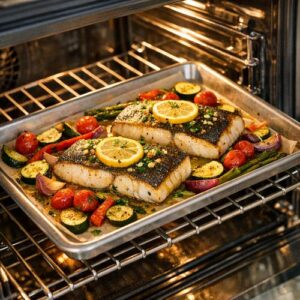
- Place your baking sheet in the preheated 400°F oven on the middle rack. The middle rack ensures even heat exposure from above and below. Set a timer for 10 to 12 minutes, depending on the thickness of your fillets. A 4-ounce fillet that's about ½-inch thick will need closer to 10 minutes; a thicker 5-ounce fillet might need the full 12. Here's where patience becomes technique: do not open the oven door during cooking. Every time you open it, you release heat and extend cooking time unpredictably. The oven should maintain steady temperature, and opening the door disrupts that. I know it's tempting to peek, but resist it.
Step 6: Recognize Doneness Without Guessing
- When the timer goes off, carefully open the oven (stand back from the heat for a second). The fish should be opaque throughout with just a slight shimmer of moisture on top. If you gently press the thickest part of a fillet with a fork, it should flake easily into tender pieces rather than resist. The flesh should be white or pale, not translucent. If it's not quite there—still slightly translucent in the thickest part—give it 2 more minutes. Fish cooks quickly once it hits the critical temperature, so these final minutes matter. But overcooking by more than 3 minutes is when things start going dry.
Step 7: The Finishing Touch
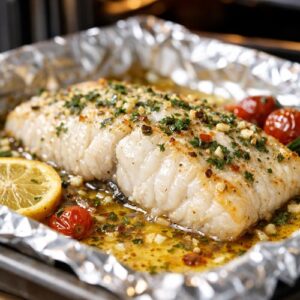
- Remove the baking sheet from the oven and let it rest for exactly 2 minutes. This brief rest allows the residual heat to finish cooking the centers while the exteriors cool just slightly, locking in moisture. Don't skip this—it's the difference between good and restaurant-quality. Transfer each fillet to a plate using a thin fish spatula or a flexible pancake turner. Drizzle with fresh lemon juice and finish with a small pinch of Maldon sea salt. That finishing salt creates a little textural contrast and a burst of clean salt flavor that makes everything taste brighter.